Device review
Pulsetto review: what it does, what it does not, and how to actually get results
Our verdict
Pulsetto: $524 $259 50% off
Pulsetto is the lowest friction way into vagus nerve stimulation. It sits on your neck, runs sessions of 4 to 20 minutes depending on the program, and needs nothing from you but the time. That combination is why it scored highest in our comparison of six devices.
Best for people who want daily stress and sleep support and will only keep a habit that is genuinely quick.
Not for anyone with an implanted electronic device, and a poor fit if you want a device that runs without a phone.
Check the current Pulsetto price- Free shipping
- 2-Year Warranty
- 30-Day Returns
Disclosure: Vagus Lab may earn a commission if you buy through links on this page. It does not change how we score devices. Our method is published and applied the same way to devices we have no commercial relationship with.
What it is
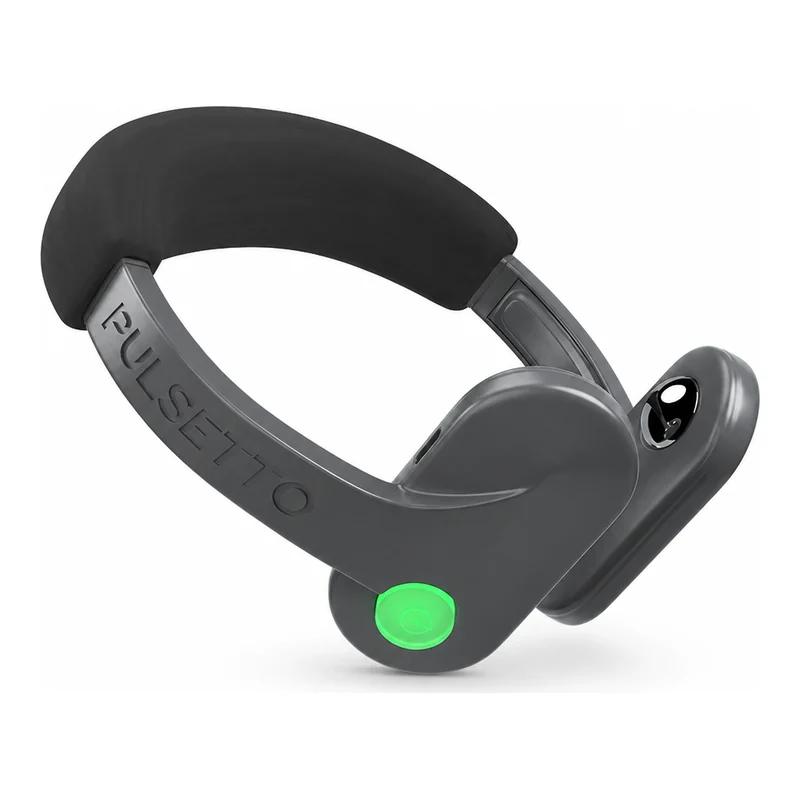
Pulsetto is a U-shaped band worn around the neck. It delivers low level electrical stimulation on both sides at once, targeting the vagus nerve where it runs as a thicker trunk, rather than at the ear where most competing devices work.
From the manufacturer's own manual, the technical picture: a rechargeable 350mAh battery over USB-C, Bluetooth Low Energy, and pulses of 12 to 46 volts peak to peak at 0.2ms, repeating every 15ms, with a stated maximum output of 30V and 40mA peak. Sessions run 4 to 20 minutes depending on which program you pick, and you control both the intensity and the duration.
One thing to know before you buy: the device is controlled through the phone app. There is a single button on the unit itself, for power. Everything else, program selection and intensity, happens on your phone. If you want a device that runs standalone, this is the wrong one, and we say more about that below.
The two mistakes that make people think it does nothing
This is the most useful part of this page, and it comes from people who nearly sent theirs back.
Mistake one: wearing it in the wrong place. In public discussion, one user described being ready to return the device on day two, then realizing the placement was off. Their words: the product images suggest the front of the neck, but the vagus nerve runs down from the jawline and ear. Once they repositioned it, their experience changed. This comes up repeatedly. If you feel nothing at all, placement is the first thing to check, not the device.
Mistake two: running the intensity too low. Users report needing to reach roughly the middle of the intensity range, and to stay there for several minutes, before anything is noticeable. Starting low is correct on your first session. Staying low for two weeks and concluding it does not work is the trap.
Neither of these is exotic. Both are fixable in under a minute. Between them they explain a large share of the "I used it for a month and felt nothing" reports, and neither is prominent in the marketing.
What users say it feels like when it is right: mild tingling and warmth, sometimes a light twitch in the neck or lip. One long term user described neck and shoulder muscles releasing in a way that made them notice how much tension they had been holding, and their breathing correcting itself. The manual describes the same sensations as normal and short lived.
What people report after using it
We do not test devices ourselves. What follows is a synthesis of what users describe publicly, and it is mixed in an ordinary way rather than a scandalous one.
The positive reports cluster around sleep and acute stress. One user described waking at 5am instead of 2:30am for the first time in months, within days. Another, using it two to four times a day, described tension release and better breathing awareness. A third used it daily for about 30 days, felt they no longer needed it every day, and moved to occasional use, which is a reasonable outcome rather than a failure.
The neutral reports are the most common and the most honest. One user at 27 consecutive days summarized it as not knowing whether it was doing anything. Effects here are subtle and cumulative, and if you are expecting something dramatic you will be disappointed regardless of the device.
The critical reports fall into two groups. First, people for whom the sensation was simply unpleasant. Second, and more often, complaints about the company rather than the hardware: an app that crashed on some Android phones, support tickets that took too long, and billing that surprised people. One user put the distinction well, saying the technology works but the business model frustrated them.
That distinction is worth holding onto while you decide. Most of the anger you will find online is about buying from Pulsetto, not about wearing Pulsetto.
What the evidence supports
Pulsetto is sold as a general wellness product. It does not hold medical device certification, and there is no substantial body of published trials on this specific unit. Its case rests on the wider transcutaneous vagus nerve stimulation literature plus the format: neck placement, short sessions, guided programs.
That literature is real but should be read carefully. Most published work studied ear stimulation rather than neck stimulation, in supervised research settings, over short periods. On safety the picture is consistent and reassuring: across 51 studies and 1,322 people, the most common side effect was skin irritation where the electrode sits at 18.2%, then headache at 3.6%, with serious events rare and mostly not attributable to the stimulation.
What that means practically: the mechanism is well studied, this particular device is not, and nobody can tell you in advance whether you personally will respond. At $259 that is a cheaper question to answer than at $900.
Pulsetto does not treat anything, and it does not replace care from a clinician.
Specifications
| Price | $259 (was $524), free shipping |
|---|---|
| Placement | Around the neck, both sides |
| Session length | 4 to 20 minutes depending on program |
| Control | Phone app over Bluetooth, one power button on the device |
| Battery | 350mAh rechargeable, USB-C |
| Output | 30V peak, 40mA peak maximum |
| Consumable | Conductive gel |
| Warranty | 2 years |
| Returns | 30 days |
| Regulatory status | General wellness product, not a medical device |
Where it falls short
It needs your phone. The manual is explicit that the main control happens through the app. Users who wanted an offline device have said so, some pointing at Nurosym as the counterexample. If you want something you can run from the device itself, this is a genuine mismatch rather than a nitpick.
The app has had rough edges. Android crash reports appear in public discussion, and support response times drew complaints from some buyers.
Sensation is not for everyone. A minority describe it as unpleasant on the neck rather than relaxing. Starting at low intensity is the way to find out where you sit.
None of these is hidden. All of them are worth knowing before rather than after.
The question everyone asks: is a $40 TENS unit the same thing
This comes up in nearly every discussion thread, so it deserves a real answer rather than a brush off.
A generic TENS unit does deliver electrical stimulation, and some people report using one with ear clips and seeing changes in their own HRV data. The current is not magic and Pulsetto has no monopoly on it.
What you get for the difference is not the electricity. It is the parameters, the placement, and the fit. Pulsetto's pulse profile is preset per program, the band holds both sides of the neck without you positioning electrodes near your carotid by hand, and the sessions are timed. With a TENS unit you are choosing frequency, pulse width and intensity yourself, on your neck, with no guidance. Some people are comfortable doing that. Most are not, and getting it wrong on the neck is a different proposition from getting it wrong on a shoulder.
An honest summary: if you are technically confident and price sensitive, a TENS unit is a legitimate path and some users are happy on it. If you want something that is already set up correctly and fits without thought, that is what the $259 buys.
What you pay
$259 once, with free shipping and a 2 year warranty. There is a 30 day money back window.
The app has a free tier and an optional premium tier that adds guided meditations, breathing exercises and affirmations. The device runs its stimulation programs without it. Premium is sold under several different promotional prices at once, so if you do want it, check which tier you are signing up for at checkout so the renewal is not a surprise. Conductive gel is the one consumable.
Who should buy it
Buy it if you want a short daily routine for stress or sleep, you would rather wear something than hold it, and you want to find out how your own nervous system responds without spending $900 to ask the question.
Do not buy it if you have an implanted electronic device such as a pacemaker, or metal implants in the neck. That is the manufacturer's own instruction, not our caution.
Look elsewhere if you specifically want a device with a published trial record behind the product itself, or one that runs without a phone. Nurosym is the usual alternative on both counts, at roughly three and a half times the price.
Frequently asked questions
Reports are mixed in the way you would expect from a wellness device. Sleep and acute stress are where positive reports cluster. Effects are subtle and cumulative rather than dramatic, and a meaningful share of people who report nothing had the device positioned wrong or the intensity too low.