Ever notice how some people stay calm in traffic jams while others white-knuckle the steering wheel? The difference might lie in something called vagal tone—a measure of how strongly your vagus nerve influences your heart rate variability. Research shows people with higher vagal tone recover from stress faster, regulate emotions better, and bounce back more efficiently from difficult situations1.
What Is Vagal Tone and Why Does It Matter?
Think of vagal tone as your nervous system's shock absorber. It reflects how well your parasympathetic nervous system can put on the brakes when stress hits.
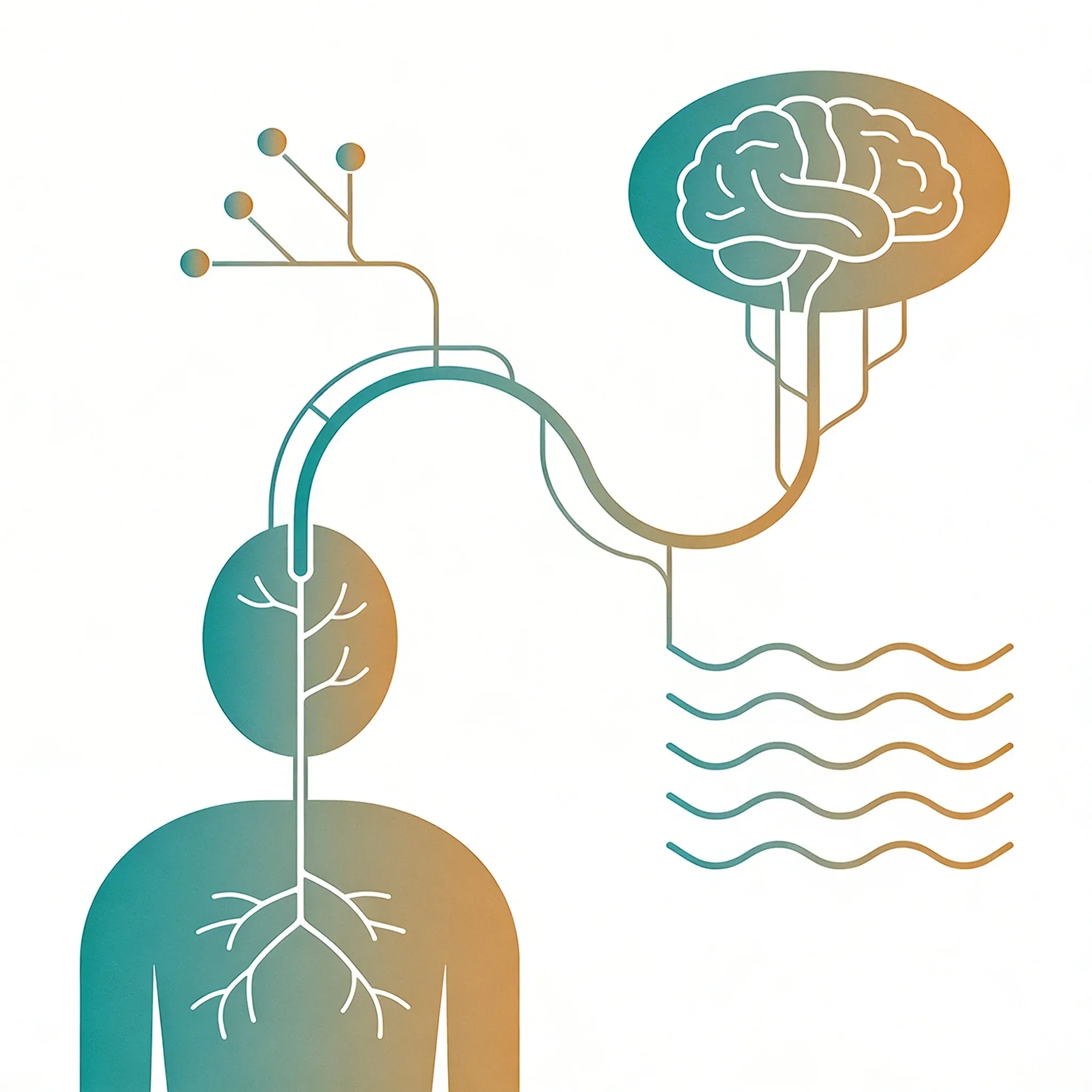
Vagal tone shows up in your heart rate variability (HRV) patterns. When your vagus nerve is strong, your heart rate naturally varies with each breath. Inhale, and it speeds up slightly. Exhale, and it slows down.
This tiny dance between heartbeats reveals everything. It shows how much control your "rest and digest" system has over your stress response2.
How Does Higher Vagal Tone Improve Stress Recovery?
Here's where it gets interesting.
Studies show that vagal tone and psychological resilience work together like a feedback loop. People with stronger vagal activity recover from acute social stress faster than those with weaker vagal tone3.
But it's not just about bouncing back. Higher vagal tone helps you use positive emotions more efficiently during stressful moments. Instead of getting stuck in fight-or-flight mode, your nervous system can shift gears.
Think of it like having a sports car with excellent brakes. You can accelerate when needed. But you can also slow down smoothly when the danger passes.
Can You Build Better Stress Resilience Through Vagal Tone?
The plot thickens.
A 2024 study found that voluntary physical activity may boost autonomic resilience to social stress through vagal mechanisms4. The researchers discovered that regular exercise appears to strengthen the vagus nerve's ability to help you recover from stressful social situations.
Early research on heart rate variability training also shows promise. When people learn to improve their HRV patterns, they often see improvements in emotional regulation and stress recovery.
The key is consistency. Your vagal tone responds to regular practice.
What About Emotional Regulation Under Pressure?
But here's the catch.
Vagal tone doesn't just help after stress hits. It changes how you handle emotions while stress is happening.
Research with youth aged 11-17 found that both resting vagal tone and how the vagus nerve responds to stress connect to anxiety control and emotional regulation abilities. Kids and teens with stronger vagal activity showed better emotional control when facing challenging situations.
This suggests vagal tone acts like an emotional thermostat. It helps you stay in the optimal zone where you can think clearly and respond thoughtfully. Rather than react impulsively.
Higher vagal tone means stronger capacity to recover from arousal states and better modulation of emotional and cognitive responses1.
Does Everyone Need the Same Level of Vagal Tone?
Given these emotional regulation benefits, you might wonder if there's an optimal vagal tone level everyone should target.
Not necessarily. Individual differences in vagal tone reflect many factors including genetics, age, and overall health status.
Some people naturally have higher vagal tone. Others may need to work at it more. The research doesn't suggest there's one "perfect" level that everyone should reach.
What matters more is the direction. Studies consistently show that improvements in vagal tone, even modest ones, can translate to better stress resilience and emotional regulation.
If you're curious about when to focus on vagus nerve stimulation, the research points to times when you're building long-term resilience rather than just managing acute stress.
Next Steps: Building Your Stress Resilience
Ready to support your vagal tone? Start with these research-backed approaches:
Begin with breathing: Try 4-7-8 breathing for 5 minutes daily. Inhale for 4 counts, hold for 7, exhale for 8. This activates your parasympathetic nervous system.
Move regularly: The 2024 research shows physical activity may strengthen vagal mechanisms. Even a 20-minute daily walk can make a difference over time.
Remember, improvements typically develop over weeks, not days. Consistency beats intensity when building stress resilience.