5 Ways to Support Your Vagus Nerve for Better Emotional Balance
Your vagus nerve acts like an emotional reset button, helping your body shift from stress mode to a calm, balanced state. When this nerve functions well, it activates your parasympathetic nervous system -- the "rest and digest" response that promotes emotional stability and resilience.
Why Does Your Vagus Nerve Matter for Emotions?
Think of your vagus nerve as a sophisticated thermostat that constantly monitors and adjusts your emotional temperature. Just like a thermostat senses when a room gets too hot or cold and makes corrections, your vagus nerve detects emotional overwhelm and helps dial down the intensity.
When you're stressed, anxious, or overwhelmed, your body gets stuck in fight-or-flight mode. Your vagus nerve is what helps flip the switch back to calm.
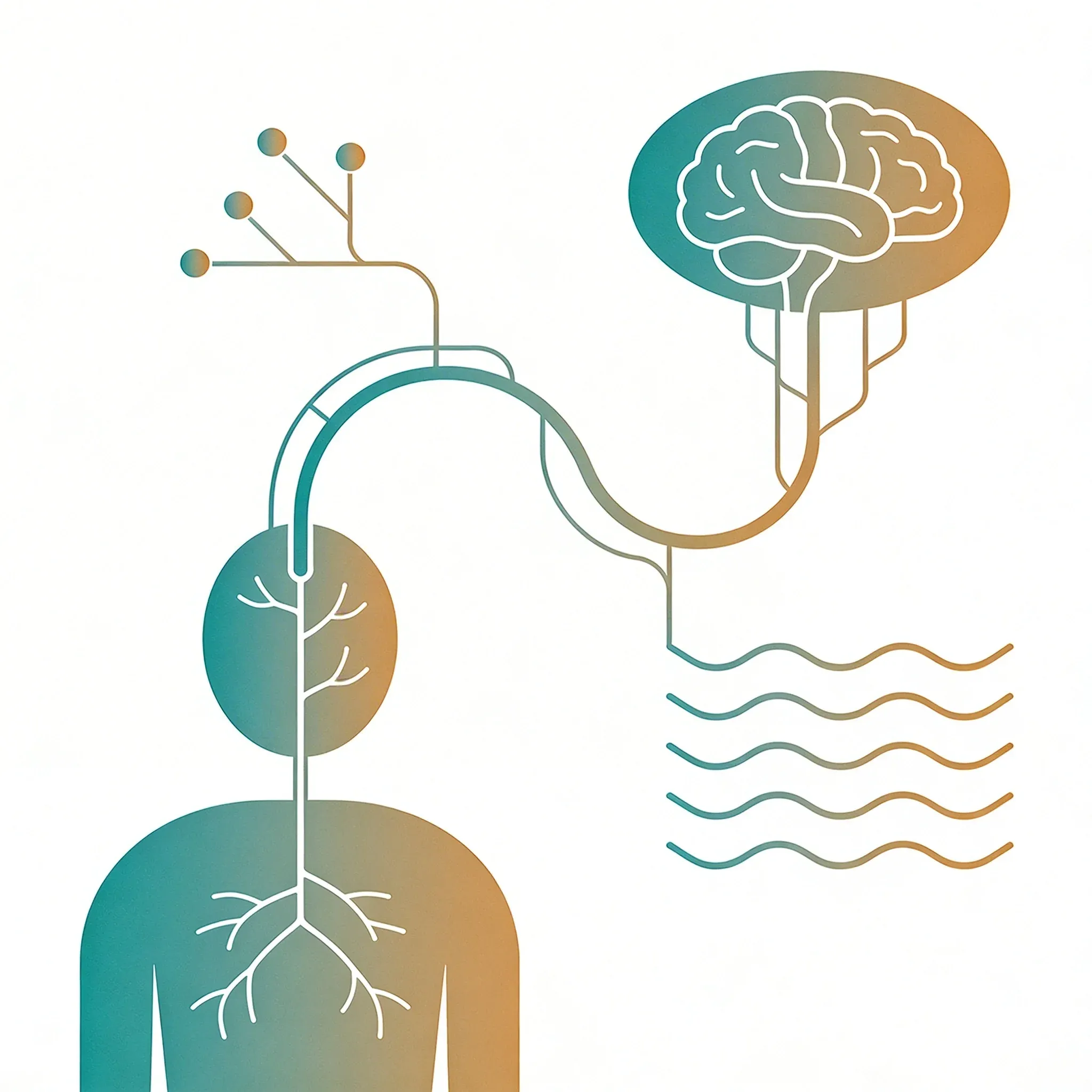
This longest cranial nerve runs from your brainstem down to your abdomen. It touches your heart, lungs, and digestive system along the way. When activated, it slows your heart rate, deepens your breathing, and tells your brain that it's safe to relax.
Research shows people with higher vagal tone -- meaning their vagus nerve is more active -- tend to have better emotional regulation and more positive feelings overall.
Here's the thing: you can strengthen this natural emotional support system through simple daily practices.
How Do Breathing Exercises Reset Your Emotional State?
Controlled breathing is one of the fastest ways to activate your vagus nerve. When you breathe slowly and deeply, especially with longer exhales, you directly stimulate this nerve through your diaphragm.
The magic happens in the exhale. When you breathe out slowly, your vagus nerve sends signals that slow your heart rate and activate the calm-down response. This shift can happen in seconds.
Try this 2-minute reset:
1. Breathe in through your nose for 4 counts
2. Hold for 2 counts
3. Breathe out through your mouth for 6-8 counts
4. Repeat 5-8 times
Many people notice they feel calmer after just a few rounds. The key is making your exhale longer than your inhale. This activates the parasympathetic response that helps regulate emotions.
For more structured approaches, try these 5 vagus nerve breathing exercises that work in under 2 minutes.
How Does Cold Therapy Activate Your Vagus Nerve?
Cold exposure -- like cold showers, ice baths, or even splashing cold water on your face -- triggers something called the dive reflex. This evolutionary response slows your heart rate and activates your vagus nerve almost instantly.
You don't need to jump into an ice bath. Start small:
- End your shower with 30 seconds of cool water
- Splash cold water on your face and wrists
- Hold ice cubes for a minute when you're feeling overwhelmed
The cold activates your vagus nerve through a direct physiological pathway. It's like giving your nervous system a quick tune-up. Many people report feeling more alert but calm after cold exposure.
For some, this becomes a daily practice. For others, it's a tool to use when stress levels spike. Find what works for your routine and comfort level.
Can Physical Movement Support Vagal Function?
Gentle physical practices can help reactivate vagal tone, especially when you've been stuck in stress mode. This isn't about intense workouts -- it's about movement that helps your body shift gears.
Neck and shoulder stretches can be particularly helpful since the vagus nerve runs through this area. Simple head rolls, gentle neck stretches, and shoulder blade squeezes may help release tension that interferes with vagal function.
Humming, singing, or chanting creates vibrations that stimulate the vagus nerve. The nerve connects to your vocal cords, so using your voice in these ways provides direct stimulation.
Gentle self-massage around your ears, neck, and jaw can also support vagal activity. The goal is to help your body remember what relaxation feels like.
These techniques work best when you're already starting to feel overwhelmed. They help interrupt the stress cycle and give your vagus nerve a chance to restore balance. Knowing which approach works best for your specific emotional patterns -- whether you need immediate stress relief or ongoing emotional support -- can make these techniques more effective for different situations.
What Simple Lifestyle Changes Support Vagal Health?
Your daily habits either support or strain your vagus nerve. Small changes can make a big difference in how well this emotional regulation system works.
Get consistent sleep. Your vagus nerve helps regulate your sleep-wake cycle. When you're well-rested, it functions better. When you're sleep-deprived, it struggles to keep you emotionally balanced.
Slow down when you eat. Eating quickly while stressed keeps your nervous system in overdrive. Taking time to actually taste your food and chew slowly activates the rest-and-digest response.
Laugh and connect with others. Social connection and genuine laughter naturally stimulate vagal activity. This is why spending time with people you care about feels so restorative.
Take breaks from screens. Constant stimulation from phones and computers keeps your nervous system revved up. Regular breaks give your vagus nerve space to reset.
These aren't huge life overhauls. They're small shifts that create space for your natural emotional regulation system to work.
Can Meditation Actually Change Your Vagal Tone?
Research suggests that regular meditation practice may increase vagal tone over time. Studies suggest that people who meditate consistently show stronger vagus nerve activity and report more positive emotions.
The connection makes sense. Meditation trains your mind to observe thoughts and feelings without getting swept away by them. This mental flexibility mirrors what a well-functioning vagus nerve does for your body -- it helps you bounce back from stress instead of staying stuck in it.
You don't need hour-long sessions. Even 5-10 minutes of daily mindfulness can support your vagus nerve function. Focus on your breath, do a body scan, or simply sit quietly and notice what you're feeling without trying to change it.
The goal isn't to empty your mind. It's to practice the skill of returning to calm when stress shows up.
How Long Does It Take to See Results?
Some vagus nerve techniques work immediately. Deep breathing, cold water on your face, or humming can shift your emotional state in minutes.
Other benefits build over time. Regular meditation, consistent sleep, and daily breathing practice may gradually increase your vagal tone over weeks or months. This means better baseline emotional regulation -- you bounce back from stress faster and feel more resilient overall.
The changes often happen so gradually that you might not notice them at first. You might realize you're sleeping better, feeling less reactive to daily stressors, or recovering more quickly from difficult situations.
Consistency matters more than intensity. Five minutes of breathing practice every day beats an hour-long session once a week.
To track your progress objectively, consider monitoring your heart rate variability, which reflects vagus nerve activity and can help measure improvements in emotional resilience over time.