Your boss just called an unexpected meeting and your heart is racing. Your palms are sweaty. Your mind is spinning through worst-case scenarios. What if you could flip a biological switch and feel calm in under 2 minutes?
Your vagus nerve responds most strongly during exhalation, making longer out-breaths the key to instant calm. Research shows that extending your exhale for just 2 minutes can shift your nervous system from fight-or-flight to rest-and-digest mode1. These five breathing patterns work by stimulating your parasympathetic nervous system through targeted vagal activation.
How Does Breathing Activate Your Vagus Nerve?
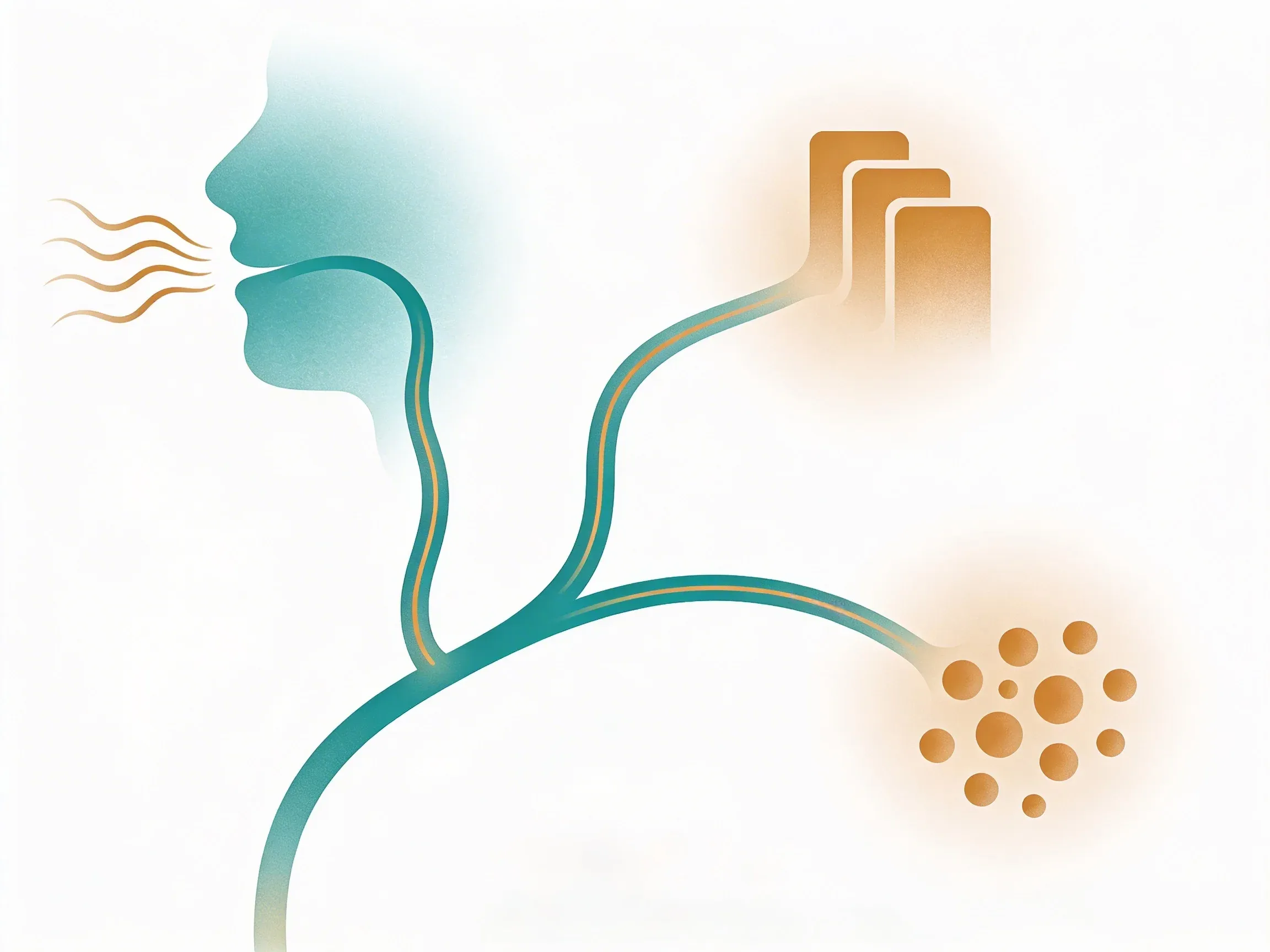
Your vagus nerve acts like a brake pedal for stress. When you breathe in, your heart rate speeds up slightly. When you breathe out, your vagus nerve fires and slows it back down.
This happens because exhalation activates your parasympathetic nervous system -- the part that tells your body it's safe to relax. The longer and slower your exhale, the stronger this signal becomes.
Recent studies confirm that specific breathing patterns can improve autonomic tone and even support healthy glucose metabolism in adults1. The key is making your exhales longer than your inhales.
What Makes Box Breathing So Effective for Stress?
Box breathing follows a 4-4-4-4 pattern: inhale for 4 counts, hold for 4, exhale for 4, hold for 4. This creates a structured rhythm that your vagus nerve can sync with.
Here's how to do it:
Try this 60-second box breathing reset:
1. Inhale through your nose for 4 counts
2. Hold your breath for 4 counts
3. Exhale through your mouth for 4 counts
4. Hold empty for 4 counts
5. Repeat 4-6 cycles
The holds between breaths give your nervous system time to register the shift. Many people feel calmer within the first minute.
How Do You Practice Diaphragmatic Breathing for Maximum Vagal Tone?
Diaphragmatic breathing engages the large muscle under your lungs, creating more vagus nerve stimulation than shallow chest breathing. Think of your diaphragm as a drumhead stretched across your ribcage -- when it moves up and down, it creates gentle massaging pressure on the vagus nerve that runs right alongside it. This direct physical contact means deeper breaths literally massage your vagus nerve into action.
Place one hand on your chest, one on your belly. The goal is to move your bottom hand more than your top hand.
Breathe in slowly through your nose, imagining air filling the space just above your belly button. Your lower ribs should expand outward. Then exhale slowly through your mouth, letting your belly fall.
Start with 5-10 breaths. Your body will naturally shift into this pattern once you practice regularly.
Can Extended Exhale Breathing Really Work in 2 Minutes?
Yes. Research shows that extending your exhale activates vagal tone faster than any other breathing pattern2. The technique is simple: make your exhale twice as long as your inhale.
Try a 4-8 pattern:
- Inhale through your nose for 4 counts
- Exhale through your mouth for 8 counts
- Repeat for 2 minutes
Some people prefer 3-6 or 5-10 ratios. The exact numbers matter less than keeping your exhale longer than your inhale.
This works because your vagus nerve fires most strongly during the exhale phase. Longer exhales = more vagal activation = faster shift to calm.
Why Does Humming While Breathing Boost the Effect?
Humming creates vibrations in your chest and throat that directly stimulate your vagus nerve. The nerve runs right through these areas, so the physical vibrations add an extra layer of activation3.
Combine humming with slow breathing:
- Inhale normally through your nose
- As you exhale, hum any comfortable tone
- Feel the vibration in your chest and throat
- Continue for 1-2 minutes
The "Om" sound works well, but any hum will do. Even a simple "mmm" sound creates the vagus-stimulating vibrations your nervous system responds to.
What Is Heart Rate Variability Breathing and How Does It Help?
Heart rate variability (HRV) breathing uses a specific 5-second rhythm: 5 seconds in, 5 seconds out. This pattern optimizes communication between your heart and brain through the vagus nerve1.
The technique synchronizes your heart rate with your breathing pattern. When done consistently, it can improve your overall stress resilience and boost your heart rate variability over time.
Practice HRV breathing for 5-10 minutes daily. Many people find this rhythm easier to maintain than counting-based patterns.
Here's the thing: consistency matters more than perfection. Pick one technique that feels natural and practice it daily.
When Should You Use These Breathing Exercises?
The beauty of vagus nerve breathing is that you can use it anywhere, anytime. Each technique works for different situations:
- Box breathing: Before presentations or stressful meetings
- Extended exhale: When you feel anxiety building
- Diaphragmatic breathing: For general daily stress management
- Humming breath: When you need privacy (the vibrations work even quietly)
- HRV breathing: As a daily practice to build stress resilience
You can also combine these with other proven timing strategies for maximum calm throughout your day.
The best time to practice is when you're already relatively calm. This trains your nervous system to access these states more easily during actual stress.