Can Vagus Nerve Stimulation Really Improve Mental Clarity?
Ever notice how your mind feels sharp at 9 AM but turns to molasses by 3 PM, when even simple decisions feel overwhelming? You might have wondered if there's something you could do to boost your focus and mental clarity naturally. Enter vagus nerve stimulation -- a trending wellness topic promising sharper thinking.
The reality? The research on vagus nerve stimulation improving mental clarity in healthy people is very limited. Most studies focus on medical treatments for epilepsy or other conditions, not mental sharpness. While your vagus nerve does influence brain function through stress and inflammation pathways, claims about boosting focus remain mostly unsupported by solid evidence.
What Does the Current Research Actually Show?
Here's what we know from science: it's not much. Most vagus nerve stimulation research looks at medical devices used to treat epilepsy or depression. These studies check if VNS affects thinking as a side effect, not as a main goal.
A 2005 study followed 40 people with epilepsy and thinking disabilities who got implanted vagus nerve devices for two years1. The researchers found the treatment was well-tolerated. But they weren't measuring thinking improvements. Their focus was on seizure control and safety.
That's the challenge with this topic. The evidence simply isn't there yet for healthy people wanting sharper thinking.
How Might the Vagus Nerve Affect Mental Function?
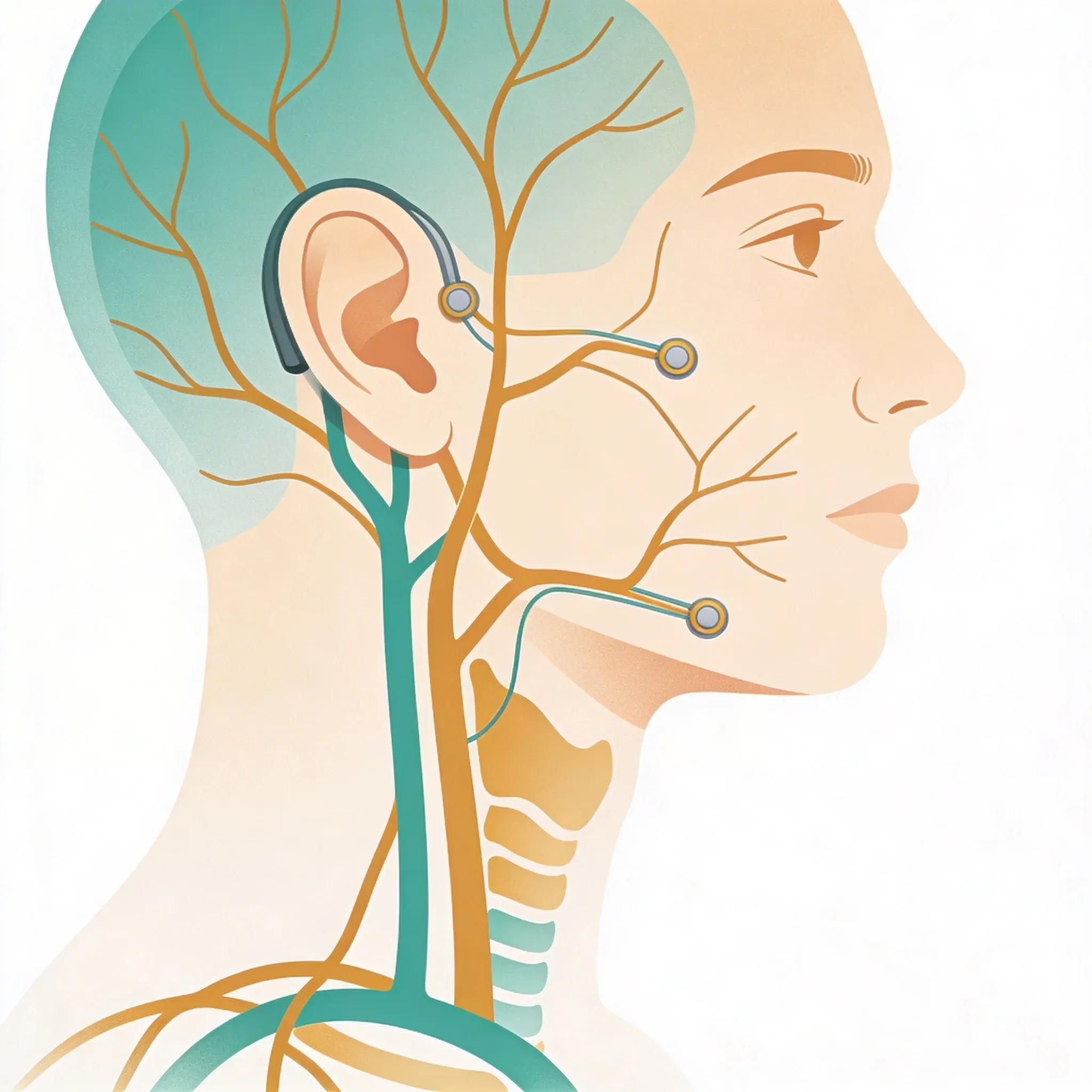
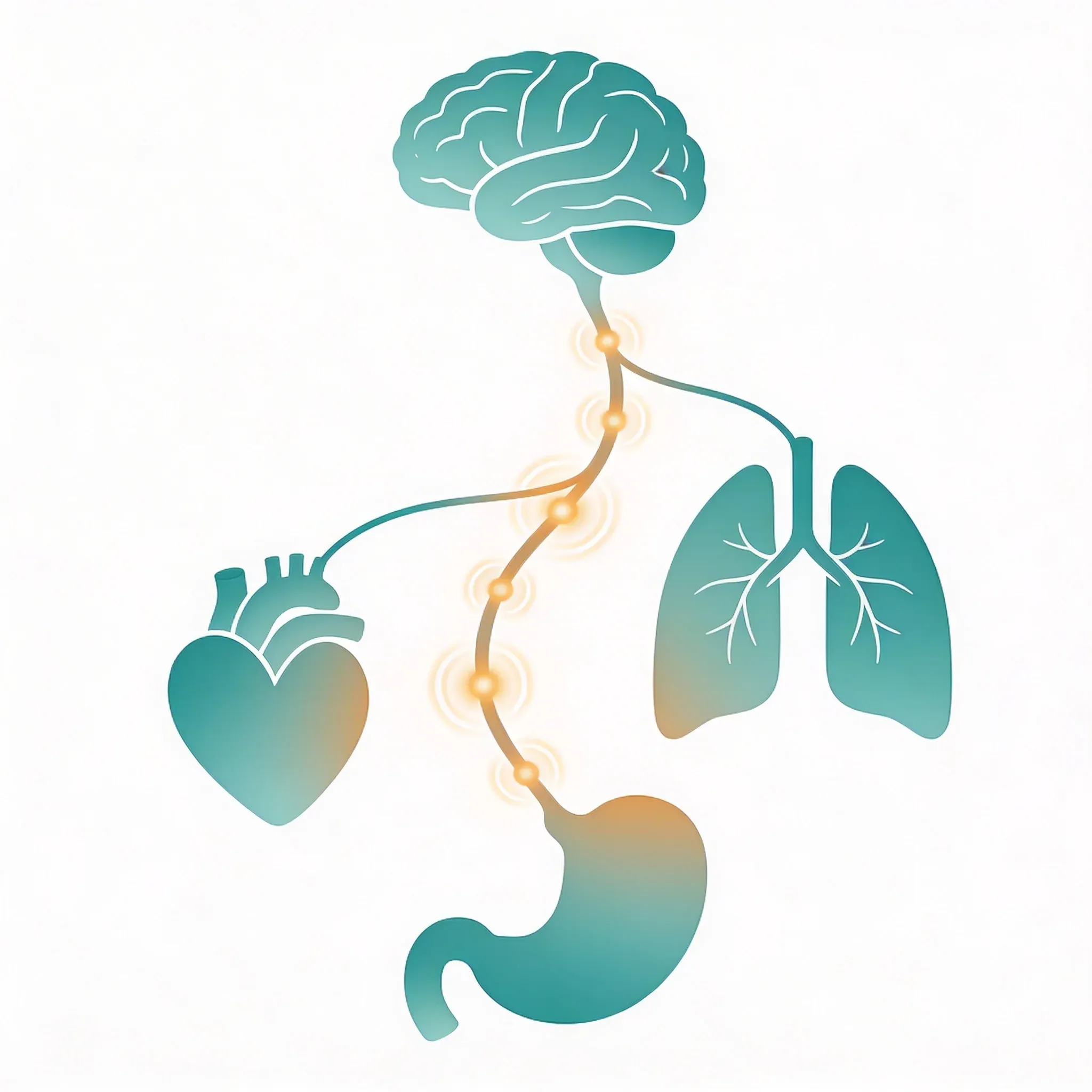
Your vagus nerve runs from your brainstem down to your belly. It connects your brain to your heart, lungs, and gut. Think of it like a biological network cable that carries signals between your brain and body organs.
The theory behind vagal stimulation and mental clarity makes sense. When your vagus nerve fires properly, it may help control inflammation throughout your body. Chronic inflammation can create brain fog and slow thinking. The nerve also affects your stress response. We know stress hormones can hurt memory and focus.
But here's the thing: having a logical explanation doesn't equal proof that stimulation works for mental sharpness.
Some research suggests the vagus nerve helps coordinate the brain's response to trauma and stress2. This link between vagal function and how your brain handles tough situations hints at broader thinking effects. But these studies focus on stress disorders, not everyday mental performance.
What About Consumer Vagus Nerve Devices?
This is where the difference between medical devices and consumer products becomes key. FDA-approved VNS implants deliver precise electrical stimulation directly to the vagus nerve through surgery. They're made to treat specific medical conditions like epilepsy.
Consumer devices that claim vagus nerve benefits work differently. Some use electrical stimulation through the ear. Others focus on breathing techniques or cold exposure that may indirectly influence vagal tone.
The research gap is huge here. Most studies on vagus nerve stimulation use implanted medical devices. They don't use the consumer products sold for wellness or mental sharpness.
Key takeaway: Medical VNS devices and consumer wellness products are completely different things with different evidence levels.
Can Natural Vagal Stimulation Help Mental Clarity?
This is where the evidence gets slightly more promising, though still limited. Practices like slow breathing, cold exposure, meditation, and regular exercise may influence vagal tone. That's your baseline vagus nerve activity.
Slow breathing exercises can shift your nervous system toward the calm state. This might indirectly support clearer thinking by reducing stress hormones. It promotes the relaxed alertness linked with better heart rate variability. Try 4-7-8 breathing: inhale for 4 counts, hold for 7, exhale for 8, repeated 3-4 times.
Cold water exposure activates the dive reflex. This involves vagus nerve signaling. Many people report feeling mentally sharp after cold showers or ice baths. Whether this is due to vagal stimulation, the alertness response to cold, or other factors isn't clear.
Regular exercise also appears to support healthy vagal tone through improved cardiovascular fitness and stress resilience.
The honest answer? We don't fully understand how it works yet.
What's Missing from the Research?
Almost everything. Here's what researchers haven't studied well:
- Controlled trials of VNS in healthy adults measuring thinking outcomes
- Long-term effects of consumer vagal stimulation devices on mental performance
- Best stimulation settings for mental benefits
- How individual differences in baseline vagal tone affect response
- Comparison of different vagal stimulation methods for mental clarity
Most importantly, we lack studies that separate the mental effects of vagal stimulation from other factors. Things like placebo effects, lifestyle changes, or simply paying more attention to your mental state.
The Bottom Line on Vagus Nerve and Mental Clarity
The research simply isn't there yet to support claims about vagus nerve stimulation reliably improving mental clarity in healthy people. While the biological connections make sense, we need well-designed studies in non-clinical populations to know if it actually works.
If you're interested in possibly supporting your vagal tone, practices like slow breathing, meditation, and regular exercise have broader health benefits. These go beyond any vagus nerve effects. These approaches carry minimal risk and support overall well-being.
For serious thinking concerns or ongoing brain fog, talk to a healthcare provider. Mental clarity issues can stem from sleep problems, nutrition gaps, medical conditions, or other factors. These need proper evaluation.
The vagus nerve research field is evolving rapidly. Future studies may give clearer answers about mental benefits. For now, approach claims about VNS and mental sharpness with healthy skepticism. Understanding when to use vagal techniques for stress management can help you make informed decisions about incorporating these practices into your wellness routine.