Breathing Exercises vs VNS Devices: Which Better Supports Heart Health?
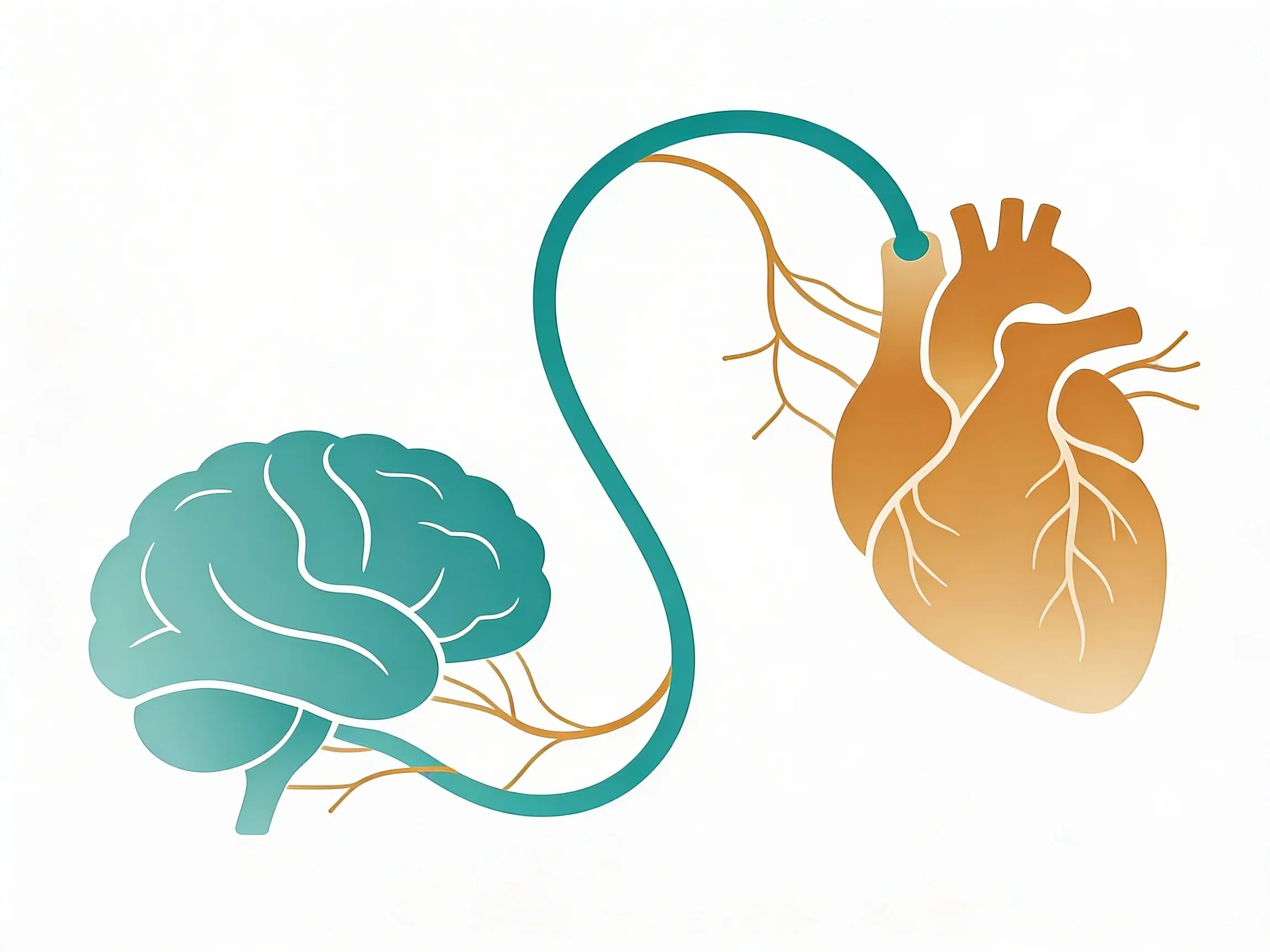
Does your heart race during stressful moments, leaving you wondering if there's a natural way to help it find its rhythm again? You're not alone. Many people experience irregular heartbeats, elevated resting heart rates, or that anxious flutter that seems to come out of nowhere. The good news is that research suggests two approaches may influence heart rate patterns: breathing exercises and vagus nerve stimulation (VNS) devices. Both work by activating your vagus nerve, but they take completely different paths to get there1.
How Do Breathing Exercises Affect Heart Health?
Deep belly breathing activates your parasympathetic nervous system naturally. When you take slow, deep breaths, your diaphragm presses against the vagus nerve. This triggers your body's built-in calm response -- like having a natural dimmer switch for your stress system2.
This breathing-heart connection works through something called breathing sinus arrhythmia. Think of it like a gentle wave pattern: your heart rate speeds up slightly when you inhale, like a wave rising. It slows down when you exhale, like the wave settling back down. Deep, slow breathing makes this wave pattern more pronounced and rhythmic.
Over time, this practice may improve your heart rate variability -- a marker that researchers associate with better heart health.
The catch? Breathing exercises need consistent practice to see benefits. You need proper technique and regular sessions to build up your vagal tone.
How Do VNS Devices Work for Heart Health?
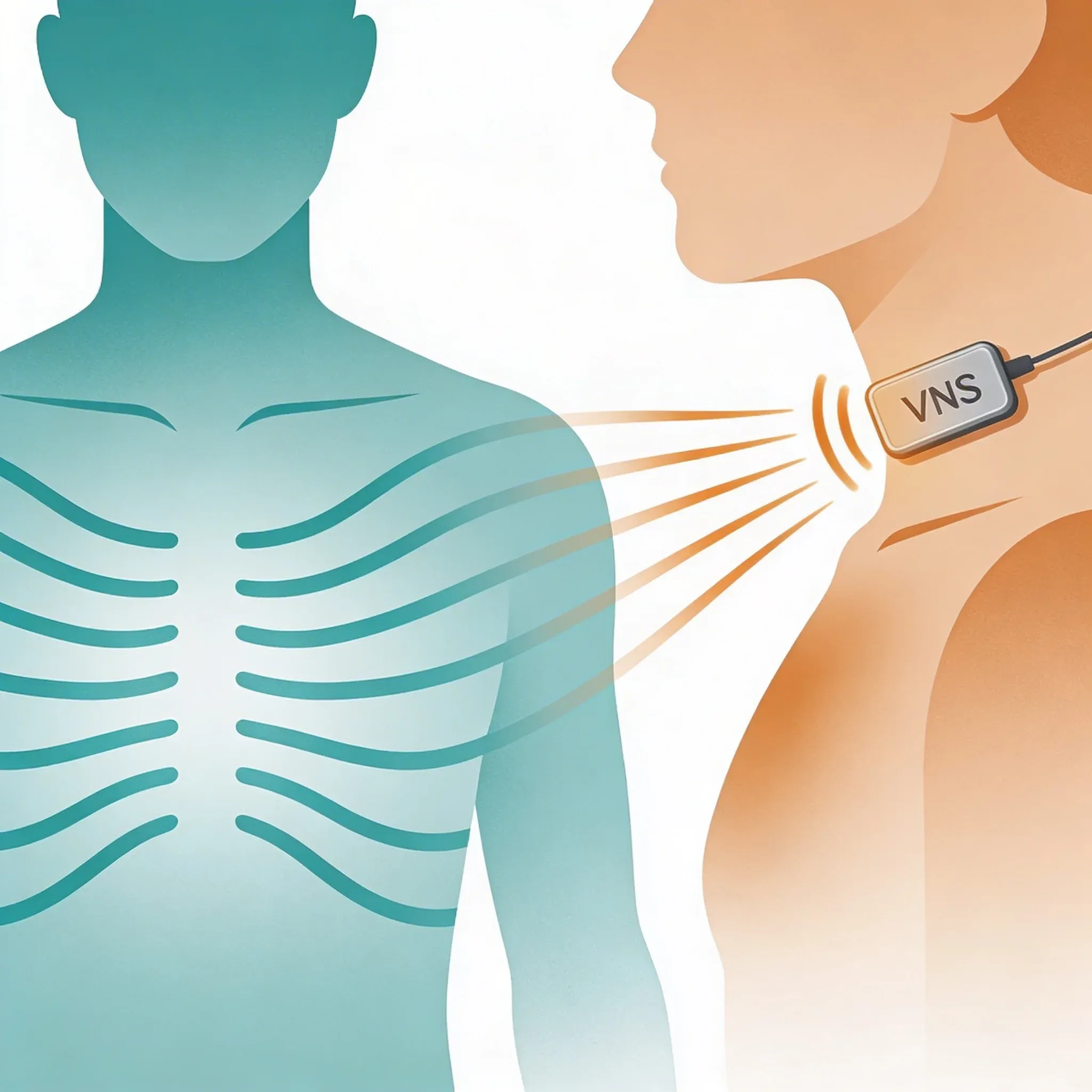
VNS devices bypass the natural breathing pathway entirely. They send targeted electrical pulses to your vagus nerve. Usually through electrodes placed on your ear or implanted near the nerve.
Think of VNS devices like having a personal trainer for your vagus nerve. Instead of relying on you to remember proper breathing technique, the device delivers consistent "coaching signals" directly to the nerve. It's like the difference between doing pushups on your own versus having someone guide your form every single rep.
A 2025 study directly compared ear VNS devices with deep breathing exercises in healthy adults. Both methods affected nervous system activity. But the VNS device gave more consistent stimulation1. This makes sense -- devices don't rely on your technique or remembering to practice.
Here's where it gets more complex:
Implanted VNS devices have been tested in serious heart conditions. The INOVATE-HF trial studied VNS for heart failure patients. Though results were mixed about clinical outcomes3. These are medical devices that need surgery and close medical supervision.
Non-invasive VNS devices (like ear clips) are different. They're designed for wellness use, not treating heart disease.
What Does the Research Actually Show?
The honest answer? Both approaches show promise. But the evidence is still developing.
For breathing exercises:
- They may activate the vagus nerve and help shift your nervous system toward calm
- They're free, accessible, and generally safe
- But UCLA Health notes that at-home vagal stimulation methods, including breathing exercises, don't yet have solid scientific evidence for specific heart benefits4
For VNS devices:
- Clinical trials show they may affect heart rate and nervous system function
- They give consistent stimulation without needing technique mastery
- But they may have side effects and often need medical supervision
- The research on non-invasive consumer devices is newer and more limited
Which Approach Fits Your Goals?
Given these mixed research findings, your choice comes down to personal preferences and goals:
Breathing exercises work well if you want:
- A natural, no-cost approach
- Something you can do anywhere
- A practice that builds over time
- General stress management alongside potential heart benefits
[VNS devices vs natural methods](/articles/vns-vs-natural-vagus-activation) might suit you if you prefer:
- Consistent stimulation without remembering techniques
- A hands-free approach
- Technology-based wellness tools
- Timing your stimulation for specific situations
Remember, neither approach should replace medical care for serious heart conditions. If you have heart disease, talk to your doctor before starting any new wellness practice.
Can You Combine Both Approaches?
Many people use both breathing exercises and VNS devices. There's no research showing they interfere with each other. In fact, combining them might give you benefits from both the natural activation of breathing plus the consistency of device stimulation.
Here's a practical approach to combining them:
Week 1-2: Start with one method only. If you choose breathing, practice 5-10 minutes of slow belly breathing daily. If you pick a VNS device, follow the manufacturer's recommended protocol (typically 20-30 minutes).
Week 3-4: Once you're comfortable with your first method, consider adding the second. You might do morning breathing exercises and evening VNS sessions, or use the device during stressful moments and breathing for daily maintenance.
Timing considerations: Some people find VNS devices work well for immediate situations (before meetings, during travel), while breathing exercises serve better for long-term vagal tone building.
Start with one approach first. Master deep breathing techniques or get comfortable with your VNS device. Then consider adding the other method if you want to enhance your vagal activation routine.
Key takeaway: Both breathing exercises and VNS devices may support heart health through vagus nerve activation, but they work differently and have stronger research support for medical-grade VNS devices compared to breathing techniques.