How Your Vagus Nerve Creates Instant Calm in Your Body
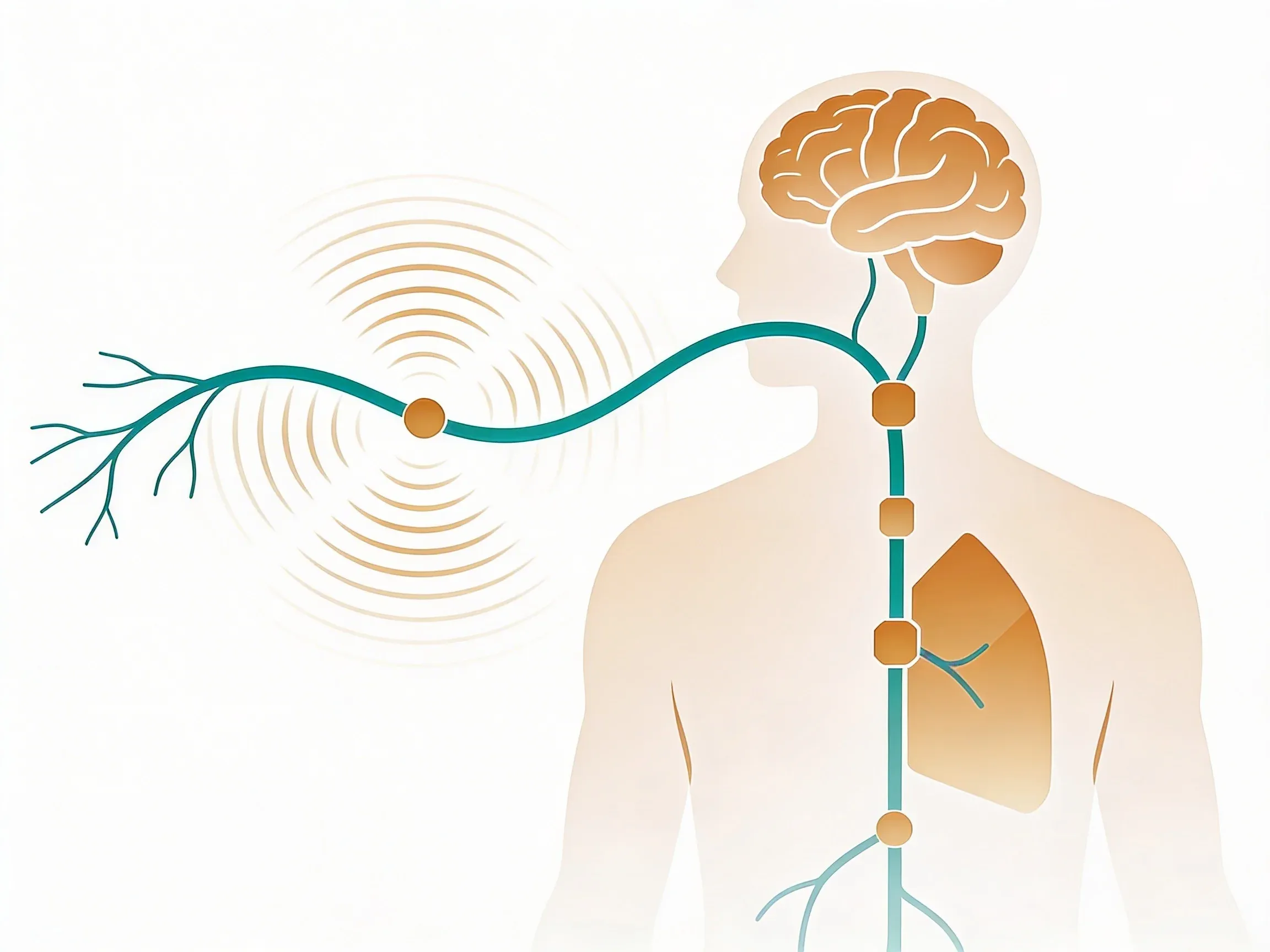
That racing heart after a close call that suddenly slows when you realize you're safe? That's your vagus nerve in action. Research suggests it activates your parasympathetic nervous system—your 'rest and digest' state. It may help slow your heart rate, deepen your breathing, and signal to your brain that it's safe to relax1.
What Happens in Your Body During Vagus Nerve Stimulation?
Picture this: you take a slow, deep breath after a stressful moment. Within seconds, your shoulders drop. Your racing thoughts quiet down.
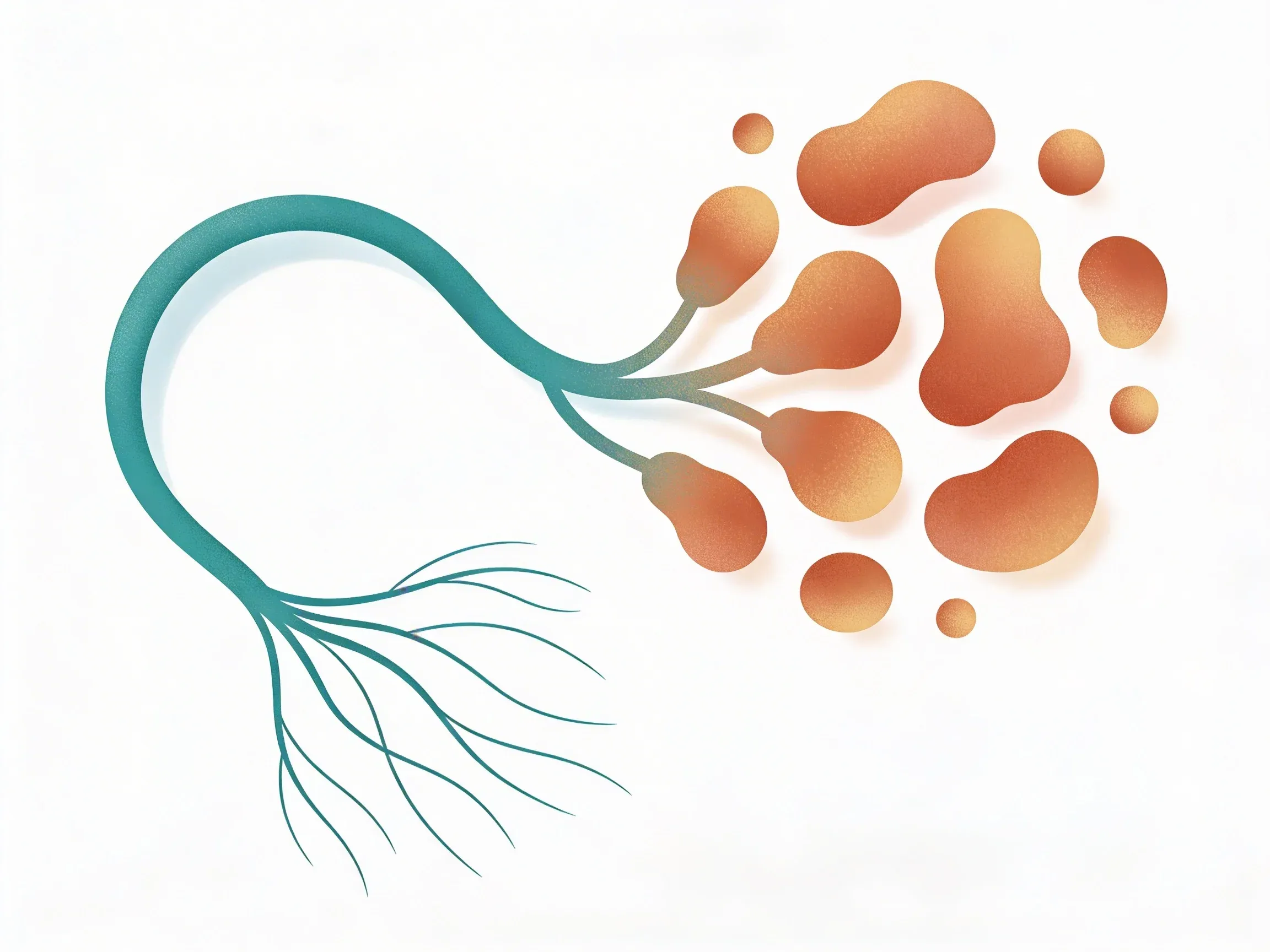
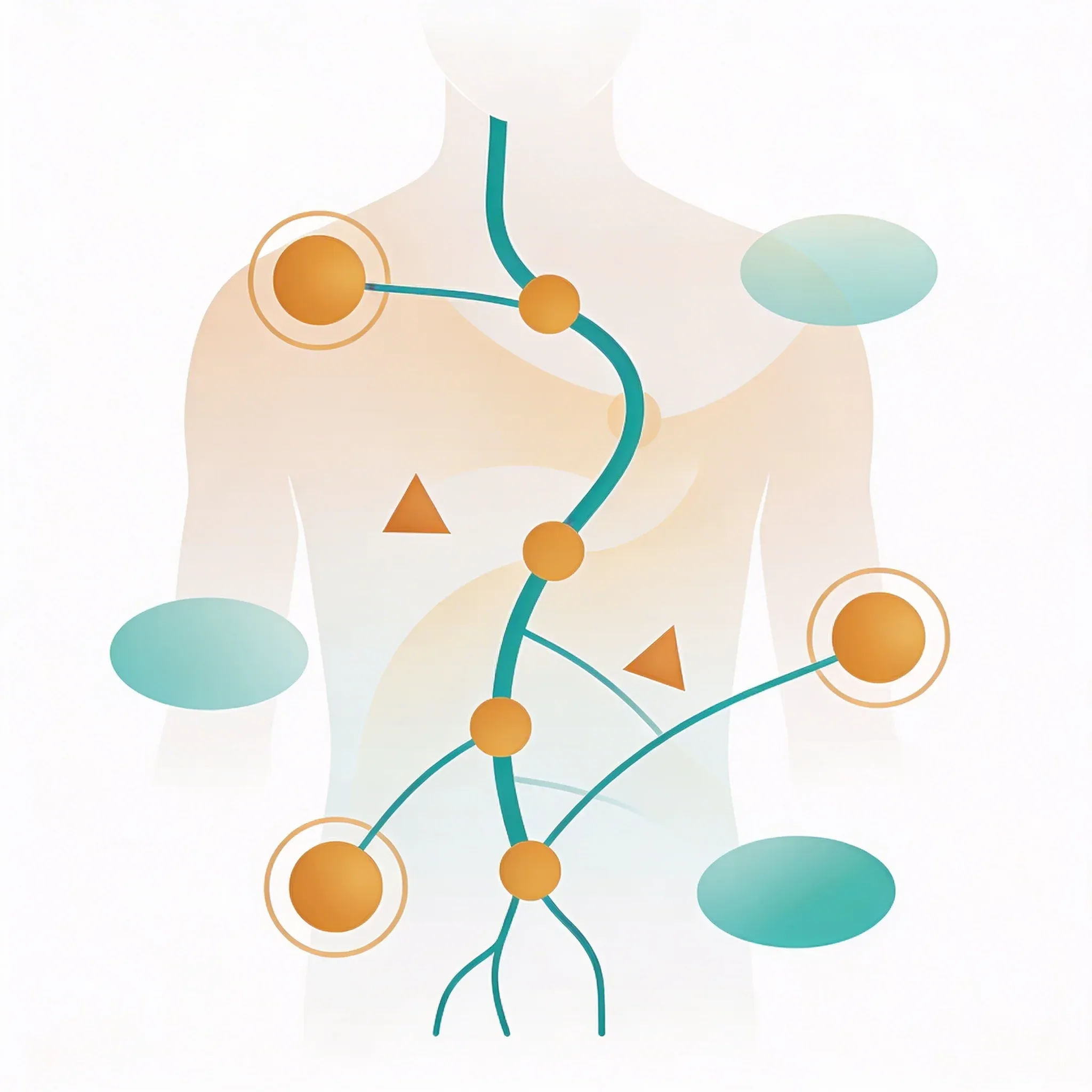
That's your vagus nerve at work. When it's activated, it sends signals to a control center in your brainstem. This area is called the Nucleus Tractus Solitarius2. Think of it like air traffic control for your body's relaxation systems.
Just as air traffic control coordinates multiple incoming flights—managing timing, directing routes, and ensuring smooth landings—this brain center orchestrates your body's shift to calm. It receives incoming signals from your vagus nerve about your current state, then dispatches instructions to different body systems to coordinate a unified relaxation response.
This brain center then triggers a wave of relaxation responses:
- Your heart rate slows as the vagus nerve releases acetylcholine. This chemical acts like a brake pedal on your heart system.
- Your breathing deepens and becomes more steady.
- Stress hormones like cortisol start to drop.
- Brain chemicals linked to calm feelings get a boost. This includes serotonin.
Studies indicate the initial response can occur within 30 seconds. It's your body's built-in reset button. This same relaxation mechanism becomes your most powerful tool when stress threatens to overwhelm you.
How Does Vagus Nerve Stimulation Counter Stress Responses?
Your nervous system has two main modes. There's fight-or-flight (sympathetic) and rest-and-digest (parasympathetic). Most of us get stuck in fight-or-flight mode.
Here's the thing: these two systems can't both be fully active at once. When your vagus nerve fires up the calm response, it turns down the stress response1.
Think of it like a seesaw. When one side goes up, the other goes down.
Vagus nerve stimulation works by:
- Stopping over-excitation of your stress system
- Turning on calm nerve fibers that promote relaxation
- Restoring balance between stress and calm responses
This is why people often feel relief right away when they engage their vagus nerve. You're literally switching your body's mode from high alert to safe. Understanding your body's autonomic nervous system balance helps explain why this switching mechanism is so crucial for long-term health.
Why Do Breathing and Cold Exposure Create Such Quick Calm?
Many relaxation techniques work because they stimulate your vagus nerve. But the process varies.
Deep breathing creates what researchers call "heart-breathing stimulation." When you exhale slowly, it turns on vagal fibers that run to your heart and lungs3. This explains why controlled breathing works so well for anxiety. You're manually triggering your calm-down system.
Brief cold exposure works differently. Cold water or air turns on your calm nervous system through a reflex response4. Your body sees controlled cold as manageable stress. This strengthens your vagus nerve's ability to shift you back to calm.
The connection helps explain why practices like yoga, meditation, and even cardio exercise have such powerful emotional benefits. They're all working through similar vagal pathways. For those interested in comparing approaches, research shows different outcomes when evaluating cold exposure vs VNS devices for stress management.
What Activities Naturally Boost Vagus Nerve Function?
Your vagus nerve responds to both physical and social inputs. Research suggests these activities may support healthy vagal function:
Physical practices:
- Slow, controlled breathing exercises (5-10 minute sessions, daily)
- Brief cold showers (30-60 seconds of cold water, 3-4 times per week, if cleared by your doctor)
- Gentle massage, especially neck and shoulders (10-15 minutes, 2-3 times per week)
- Moderate cardio exercise (20-30 minutes, 3-5 times per week at 60-70% max heart rate)
Social and emotional practices:
- Expressing gratitude regularly (5-minute daily journaling or reflection)
- Acts of kindness toward others (aim for small daily gestures)
- Meaningful social connections (quality time with loved ones, weekly)
- Mindfulness and meditation (10-20 minute sessions, daily practice)
The social connection piece is fascinating. Your vagus nerve doesn't just respond to physical stimulation. It also reacts to emotional safety and connection.
Some people also explore targeted timing strategies for these techniques. Learning when to use vagus nerve stimulation for maximum calm can help you apply specific methods during your most stressful periods or when you need quick relief.
How Long Does It Take to Feel the Relaxation Effects?
The timeline depends on the method and your current stress level.
Right away (30 seconds to 2 minutes):
- Deep breathing exercises
- Cold water on face or wrists
- Gentle neck massage
Short-term effects (5-15 minutes):
- Extended breathing sessions
- Brief meditation
- Progressive muscle relaxation
Longer-term changes (weeks to months):
- Regular meditation practice
- Consistent exercise routine
- Better heart rate variability from ongoing vagal training
The relaxation response itself is quick. But building a more resilient, responsive vagus nerve takes consistent practice over time. This improvement in nervous system flexibility can be measured through changes in your body's stress recovery patterns. Understanding how vagus nerve stimulation can boost your heart rate variability provides insight into tracking your progress as your nervous system becomes more adaptable.
Can You Overdo Vagus Nerve Stimulation?
Your body has built-in safety mechanisms. But moderation is still smart.
Signs you might be overdoing it:
- Feeling dizzy during or after techniques
- Unusual fatigue or sluggishness
- Blood pressure dropping too low (if you have existing BP issues)
Most natural vagus nerve techniques are self-limiting. You'll naturally want to stop cold exposure when it becomes uncomfortable. Or end a breathing session when you feel relaxed.
But people with heart conditions should be careful with cold exposure and new exercise routines. Always check with your doctor first. For detailed guidance on this topic, learn about the warning signs in our guide on whether you can overstimulate your vagus nerve.
Talk to your doctor before starting any new wellness practice. This is especially true if you have existing health conditions or take medications for anxiety, depression, or heart issues.