Why VNS Devices Target Your Neck and Ear (Not Your Chest)
Why does your VNS device target your ear when your gut symptoms are the problem? It seems backwards – if you want to calm your digestive issues, why not stimulate the nerve right where it reaches your belly? The answer lies in a simple anatomical truth: vagus nerve devices target your neck and ear because these spots offer the best access to nerve fibers that control your whole system. The vagus nerve runs close to skin in your neck. Specific ear areas contain nerve branches you can reach without surgery1.
Where Does Your Vagus Nerve Run?
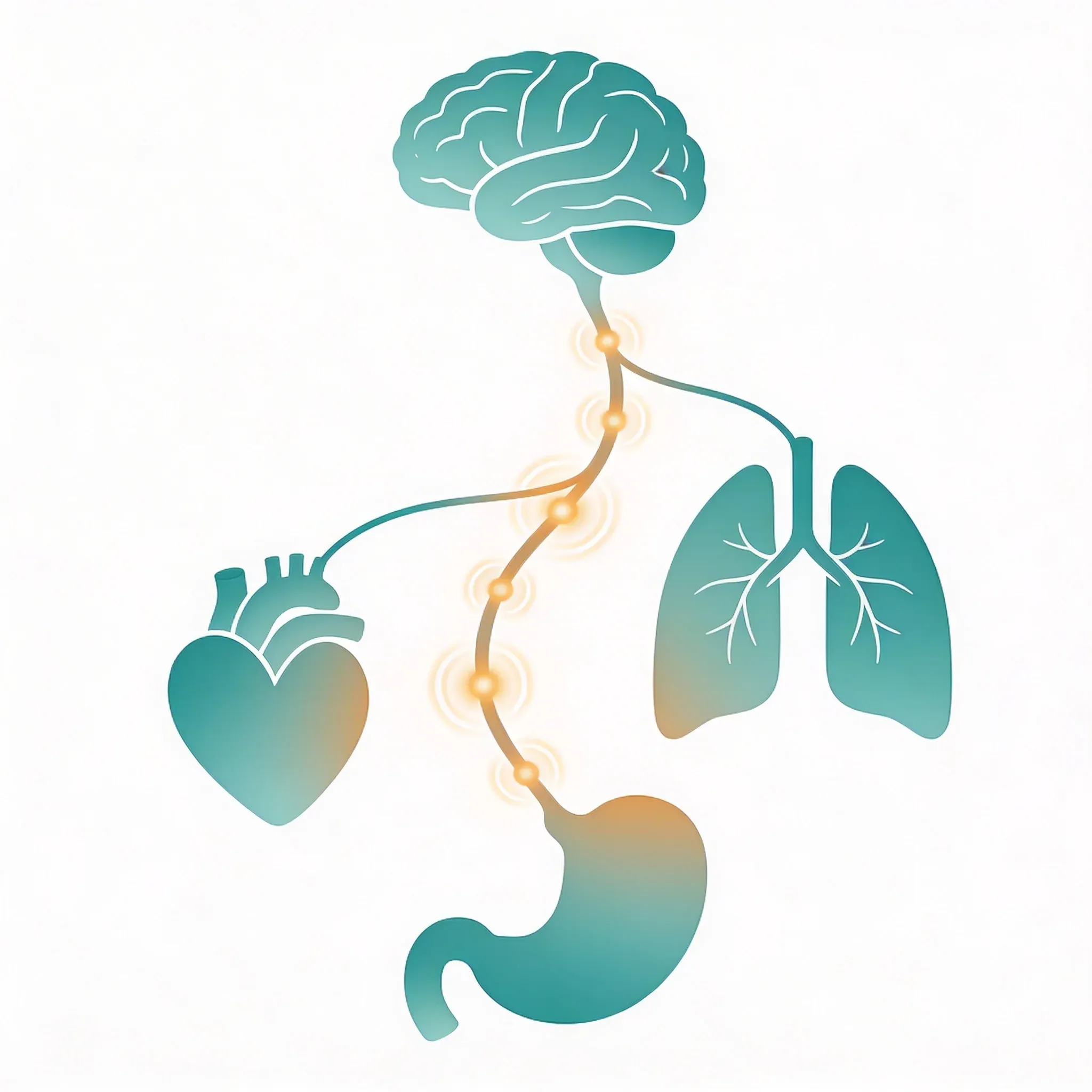
Your vagus nerve starts in your brainstem. It takes a winding path through your body. It exits your skull through a small opening. Then it travels down through your neck into your chest and belly2.
Think of it like an electrical wiring system in your home – you want to access the main cable before it splits into individual circuits, not chase dozens of tiny wires scattered behind your walls. The main "cable" runs right down your neck. This makes it easy to access. But once it reaches your chest, it splits into many branches. These spread out to your heart, lungs, and gut organs.
Just like accessing the main electrical panel is safer and more effective than trying to modify individual circuits throughout your house, stimulating the nerve at the "main panel" level in your neck affects all the downstream systems. This branching pattern explains something important. Neck stimulation affects many body systems at once. You're hitting the nerve before it divides up. Now let's explore why surgeons choose one specific side of this neck pathway.
Why the Neck Works Best for Implanted VNS
Building on that electrical system concept, surgical VNS devices almost always target the left side of your neck. There's a practical reason for this choice.
The right vagus nerve sends more branches to your heart. The left side sends fewer. Stimulating the right side could mess with your heart rhythm. The left vagus nerve offers a safer path1.
Surgeons prefer the mid-neck area. The nerve sits close to the surface here. They can reach it without going too deep. They're targeting the nerve before it branches to different organs.
Here's the thing: the deeper you go, the more the vagus nerve spreads out. By the time it reaches your belly, it's not one clear target anymore. It's a network of smaller branches woven through your organs.
While neck access gives us the main nerve trunk, there's another pathway that works without surgery. This brings us to the ear.
What Makes Ear Stimulation Work?
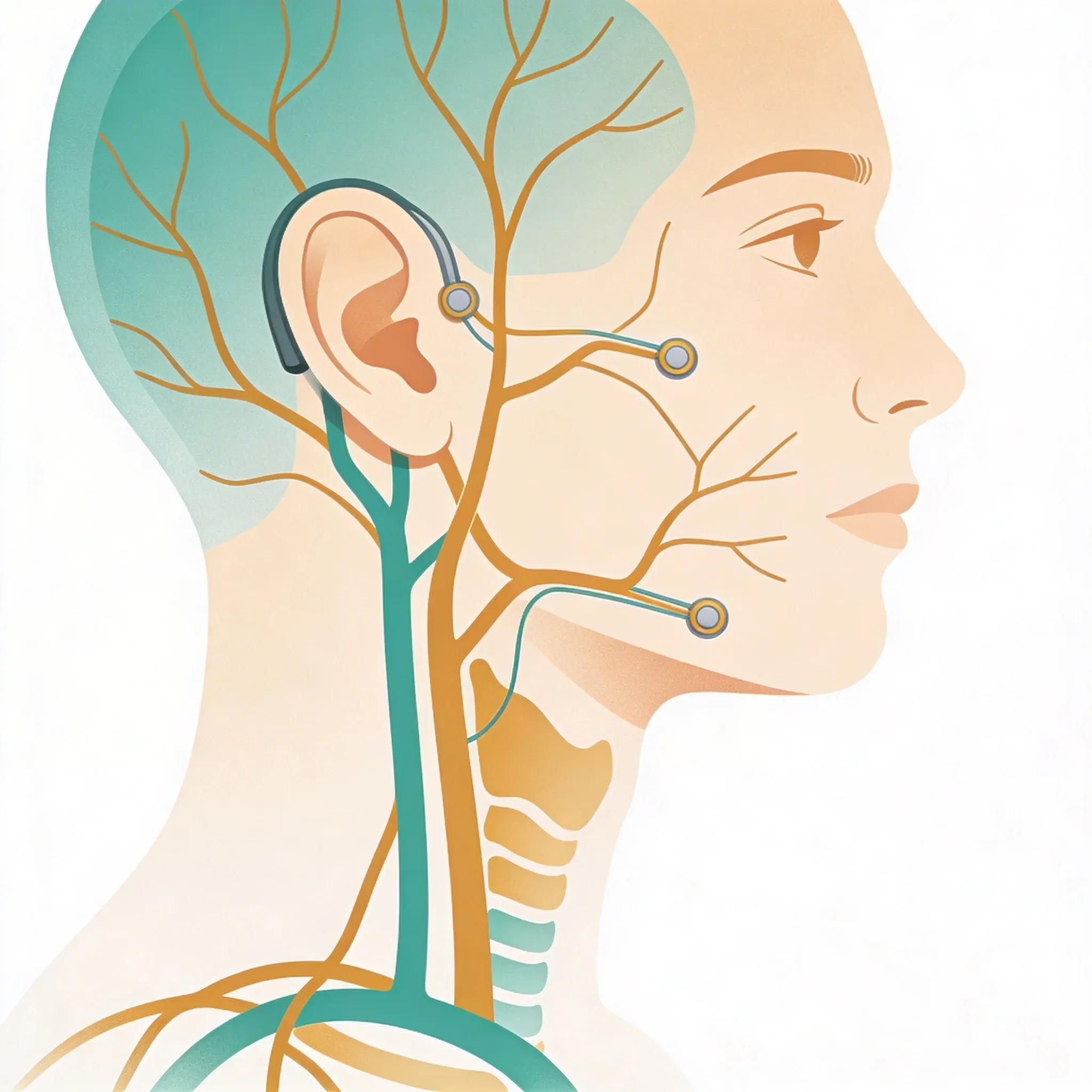
Your ear might seem like an odd place to stimulate the vagus nerve. But specific parts of your ear contain vagus nerve fibers. You can reach them from the skin surface.
The most effective ear spots include:
- Tragus: The small flap in front of your ear canal
- Concha: The bowl-shaped area inside your outer ear
- Cymba concha: The upper ridge of the concha area
These areas contain special vagus nerve fibers. Scientists call them "cutaneous afferent" fibers. That means nerve branches that carry signals from your skin back to your brain3.
Unlike neck stimulation, ear stimulation doesn't need surgery. The nerve fibers sit close to the surface. Gentle electrical pulses can reach them through your skin.
Now that we've mapped these access points, let's understand how location affects what actually happens when you stimulate.
How Location Determines What Gets Stimulated
Understanding these different pathways – neck and ear – helps explain why location matters so much.
Neck stimulation hits the main trunk before it branches. This means you influence many pathways at once. Heart rate, digestion, inflammation response, and mood regulation all get affected.
Ear stimulation targets specific sensory branches. These fibers mainly carry information from your body back to your brain. They don't send as many commands from your brain to your organs.
Both device approaches can turn on the "rest and digest" response. But they work through different pathways to get there.
With these pathway differences in mind, you might wonder why other body areas don't work for stimulation.
Why Some Body Areas Don't Work for VNS
You might wonder why VNS devices don't target your chest or belly. The vagus nerve does important work there.
The answer comes down to access and anatomy. Once the vagus nerve reaches your chest, it becomes part of complex networks. It wraps around your heart and lungs. It's not a single, clear target anymore.
In your belly, the vagus nerve spreads into a web. Scientists call this the enteric nervous system. It's your "gut brain." Research shows this network works somewhat on its own4. It operates apart from the main vagus pathways. Targeting it well would need many stimulation points, not just one.
Plus, reaching these deeper nerve branches would need invasive procedures. The surgical risks would be higher.
The neck and ear offer the best mix of nerve access and safety. They let you influence vagus nerve activity without the complexity of targeting scattered branches.
Now let's apply this anatomical knowledge to choosing the right approach for your needs.
How Anatomy Affects Your Device Choice
Understanding where the vagus nerve is accessible can guide your stimulation approach. Here's what the anatomy tells us about choosing methods with specific parameters:
If you need consistent, strong stimulation: Surgical implants in the neck may be worth considering. They provide direct contact with the main nerve trunk. Typical settings use frequencies around 20-30Hz with pulses lasting 30 seconds every 5 minutes. This gives reliable, measured stimulation.
If you want non-invasive options: Ear-based devices offer good access to vagus nerve branches through the skin. Look for devices that target the tragus or concha areas. Most ear devices use frequencies around 25Hz with 15-30 minute sessions.
Consider your goals: Neck stimulation affects multiple body systems simultaneously. Ear stimulation may be gentler but still effective for general nervous system balance.
The key is matching your approach to what the nerve anatomy allows. You can't force stimulation where the nerve isn't accessible.
Simple Decision Framework
Use these questions to find your best approach:
- Are you open to surgical procedures? If yes, consider implanted neck devices for strongest stimulation. If no, focus on ear-based options.
- Do you need daily, consistent stimulation? If yes, implanted devices provide reliable scheduling. If no, handheld ear devices offer flexibility.
- Are you sensitive to electrical sensations? If yes, start with gentle ear stimulation. If no, neck approaches may work well.
- Do you have ear problems or hearing aids? If yes, transcutaneous neck devices (which stimulate through intact skin) might be better than ear placement.
Key takeaway: Your vagus nerve's location explains why devices work where they do. The neck offers access to the main nerve trunk. The ear provides a non-invasive pathway to sensory branches.