Why Your HRV Monitor Shows Weird Numbers After Vagus Nerve Stimulation
You just finished a 20-minute vagus nerve stimulation session. You check your HRV monitor expecting to see improvements. Instead, your numbers look completely different than usual. Maybe your LF/HF ratio dropped dramatically. Or your RMSSD spiked then crashed back down.
This confusion is common. Vagus nerve stimulation can shift your heart rate variability scores in unexpected ways. It changes the balance between your sympathetic and parasympathetic nervous systems. Research shows VNS affects the LF/HF ratio -- a key HRV measure that shows how well your body switches between "fight or flight" and "rest and digest" modes.
What Is Heart Rate Variability and Why Does It Matter?
Heart rate variability measures the tiny differences in time between your heartbeats. Your heart doesn't beat like a metronome. It speeds up and slows down slightly with each beat.
This variation is actually a good thing.
Think of your nervous system like a smart thermostat. A flexible thermostat adjusts smoothly throughout the day -- warming up gradually in the morning, cooling down gently at night, fine-tuning temperature based on activity. A rigid thermostat only has two settings: blast heat or shut off completely. The smooth adjustments work much better.
Your heart works the same way. Higher HRV usually means better heart health. It shows your nervous system is flexible and responsive. When your autonomic nervous system can quickly adjust to different demands -- speeding up during stress, slowing down during rest -- your heart rhythm reflects this adaptability through increased variability. Lower HRV, especially when it drops over time, links to higher risk of heart problems1.
A less flexible nervous system produces more rigid, predictable heart rhythms.
What HRV Changes Mean for Your Heart Health
Here's the thing:
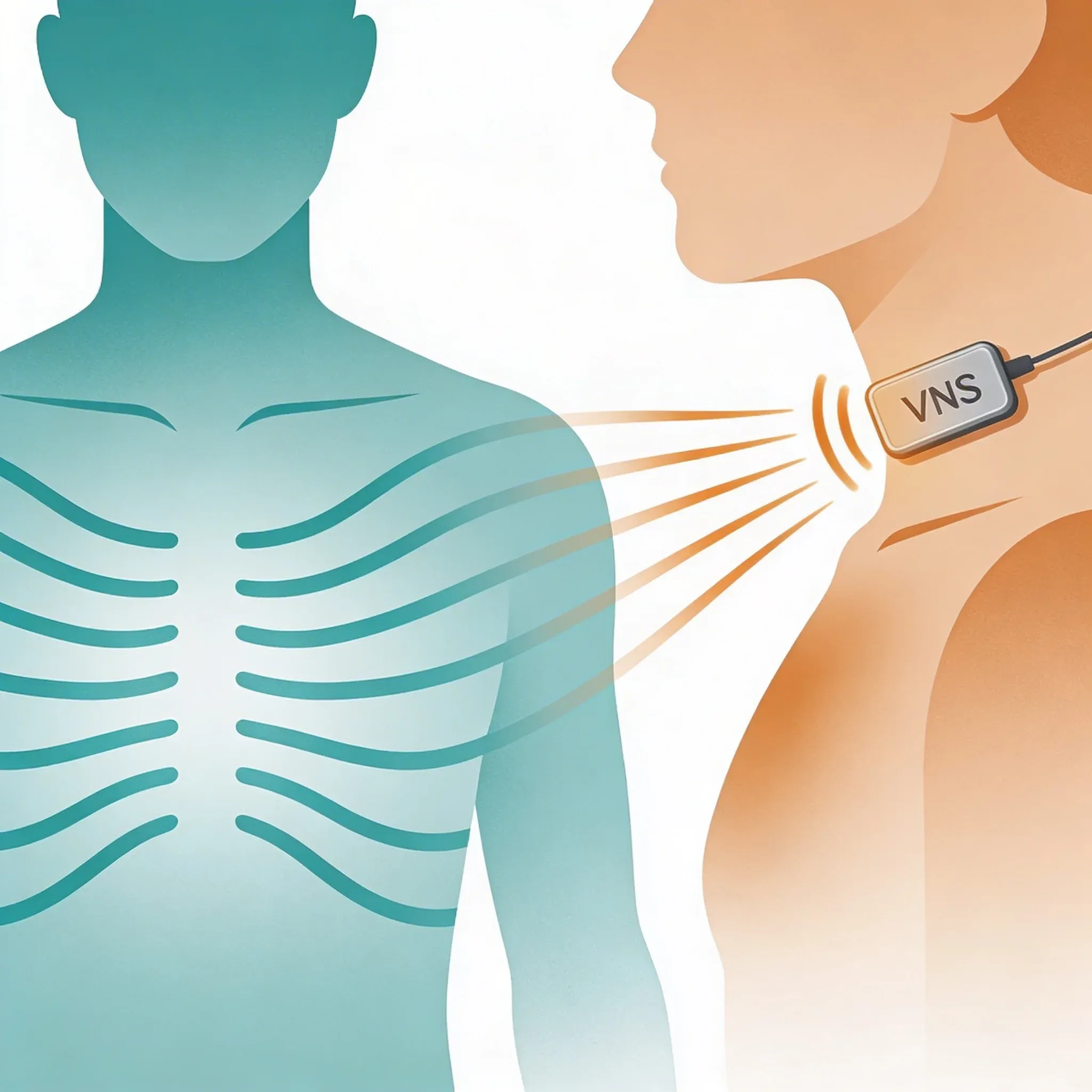
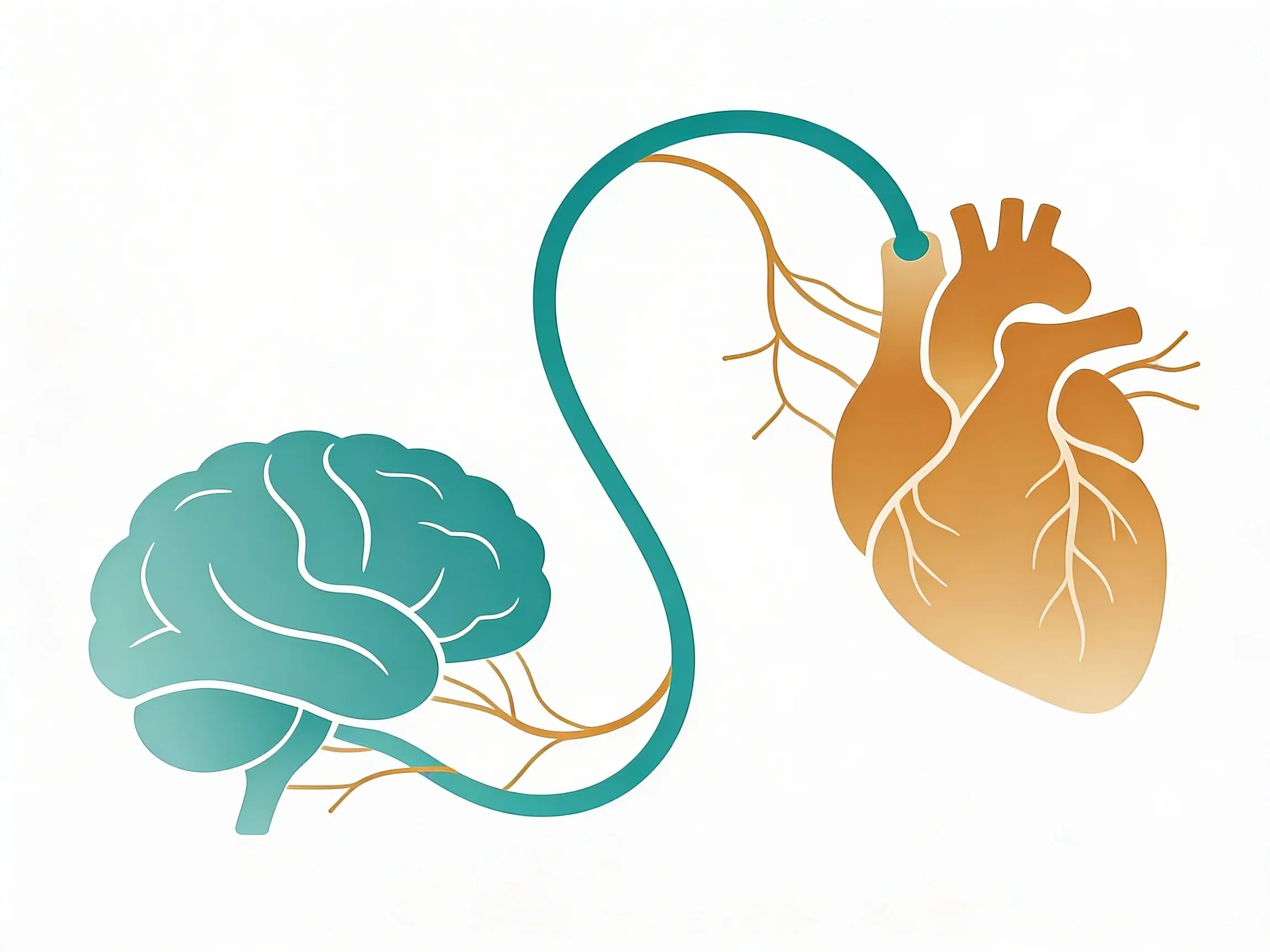
Vagus nerve stimulation works mainly through sensory pathways. It doesn't directly control your heart. When you stimulate the vagus nerve in your ear, you're sending signals up to your brain. Your brain then influences your heart through complex nervous system pathways2.
This indirect approach helps explain why HRV changes from VNS can be subtle. They can also vary between people.
You're not directly overriding your heart's rhythm. You're giving your nervous system better information to work with.
Key insight: The LF/HF ratio reflects nervous system balance. When VNS lowers this ratio, it suggests your parasympathetic system is getting stronger. This is usually a positive shift for recovery and stress resilience.
In problems like heart failure, the sympathetic nervous system becomes overactive. Research suggests VNS may help restore balance. Animal studies indicate it can improve left heart function by fighting too much sympathetic activity2. However, translating these findings from animal models to human applications requires more clinical research.
How Does Vagus Nerve Stimulation Affect HRV Measurements?
When you stimulate your vagus nerve, you're giving your parasympathetic nervous system a boost. This shift shows up in your HRV data in specific ways.
Research on transcutaneous auricular vagus nerve stimulation found that VNS changes the LF/HF ratio in HRV measurements2. This ratio compares low-frequency to high-frequency heart rate variations.
Quick Reference: Key HRV Measurements
- LF/HF Ratio: Compares low-frequency to high-frequency variations (lower = more parasympathetic)
- RMSSD: Beat-to-beat variability (higher = better recovery)
- SDNN: Overall variability over time (higher = more flexible nervous system)
- HF Power: High-frequency variations linked to breathing and vagus nerve activity
A lower LF/HF ratio suggests stronger parasympathetic tone. That's the calm, recovery state.
But there's a catch.
The effects aren't always straightforward. Some studies show improvements in certain HRV measures like SDNN. Others report that HRV actually decreases during stimulation without changing your overall heart rate2.
Location matters too. Where you place the stimulation and what electrical settings you use can change how your HRV responds2.
Do HRV Improvements From VNS Actually Reduce Heart Disease Risk?
Now here's where it gets tricky:
Loss of heart rate variability over time links to higher heart risk1. So in theory, anything that improves HRV should help.
But most human studies on VNS and HRV involve small groups of people. They also use short observation periods.
We don't yet have long-term data. We don't know if VNS-induced HRV improvements lead to fewer heart attacks. The research is promising but early.
What we do know is that VNS can influence the nervous system balance that HRV reflects. Whether that leads to measurable health benefits over months or years is still being studied.
Here's what's surprising:
Some people see big HRV improvements with VNS while feeling no different day-to-day. Others report feeling much calmer and more resilient but show minimal HRV changes on their wearable devices.
How to Track HRV Changes From Vagus Nerve Stimulation
If you're exploring vagus nerve stimulation for overall wellness and stress management, you might want to track HRV changes. Here's what to keep in mind:
Establish a 2-week baseline before starting VNS. Take daily measurements at the same time. Track weekly averages rather than daily fluctuations. Changes greater than 10% in RMSSD may be meaningful indicators of nervous system shifts.
Wearable devices can track HRV trends. But they're not medical-grade tools. They're best used for spotting patterns over time rather than making day-to-day choices about your health.
Look for changes in your baseline HRV over weeks or months. Don't focus on daily ups and downs.
Sleep quality, stress, alcohol, and exercise all affect HRV more than most wellness tools do.
Some people see HRV improvements within a few weeks of starting VNS. Others may not see measurable changes even if they feel better overall. Individual responses vary a lot based on your body and the stimulation settings used.
Understanding how your HRV patterns connect to vagus nerve function helps you interpret these measurements more effectively. Consistency matters more than intensity when it comes to seeing measurable changes.
The Bottom Line on VNS and Heart Rate Variability
Vagus nerve stimulation does influence heart rate variability. But the relationship is more complex than "more stimulation equals better HRV."
The research shows mixed effects. These depend on how, when, and where you apply the stimulation.
What's clear is that the connection between HRV and vagus nerve function reflects something important. It shows your nervous system's flexibility. Whether improving that flexibility through VNS leads to long-term heart benefits is still an open question.
If you have existing heart problems, talk to your doctor before using any form of vagus nerve stimulation. HRV monitoring is useful for tracking trends. But it should never replace professional heart assessment.