How Long Does Vagus Nerve Stimulation Take to Reduce Stress?
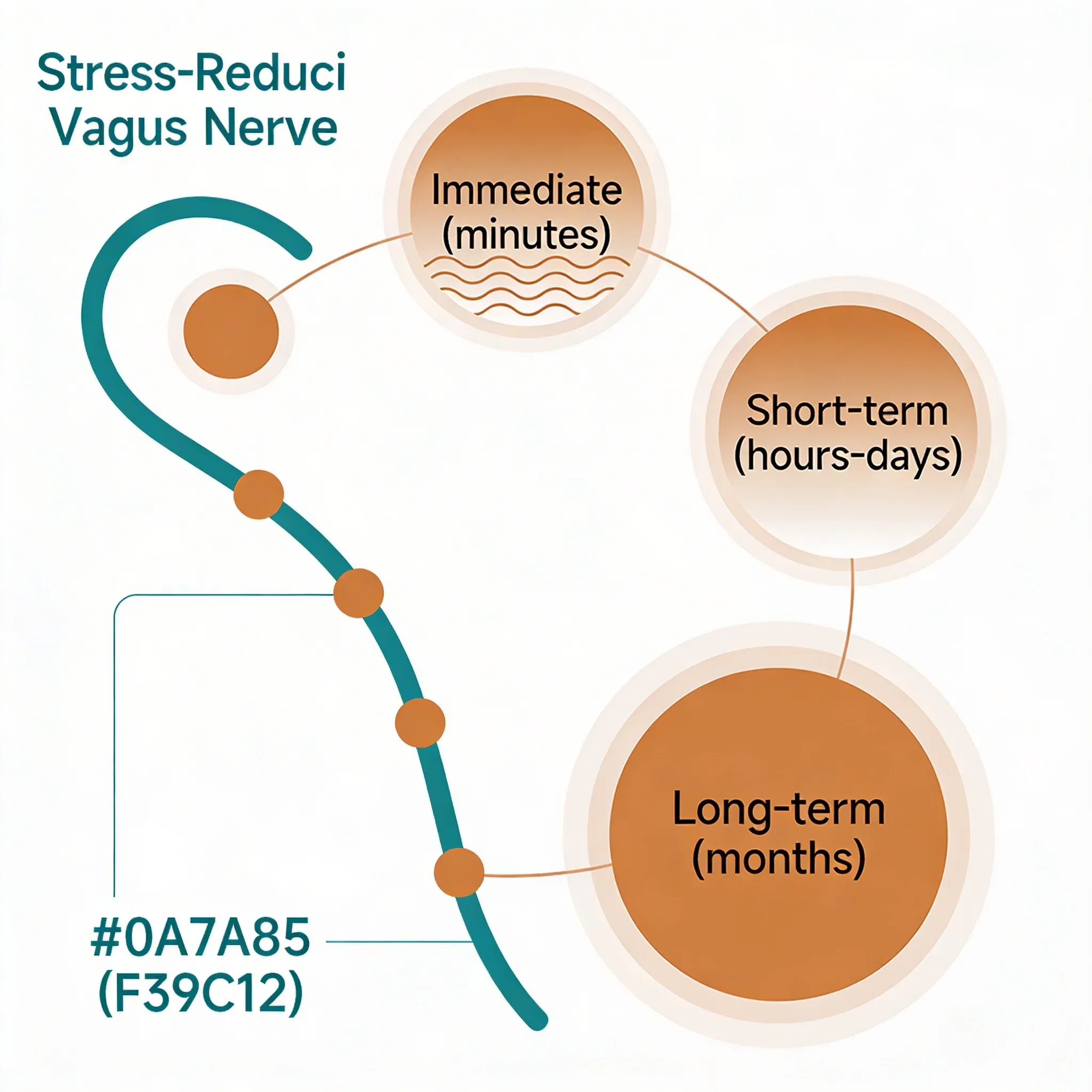
Research suggests VNS may influence certain physiological responses within minutes. But real stress relief takes weeks to months of daily use. Your nervous system responds fast, but building lasting calm takes time -- like how fitness improves with daily exercise.
Can I Feel Changes Right Away?
Your vagus nerve connects to brain areas that control stress. That's why some people notice effects now.
When you stimulate this nerve, it may trigger your calm system within minutes. You might feel:
- Heart rate slowing down
- Breathing getting deeper
- Muscle tension going away
- A sense of calm coming over you
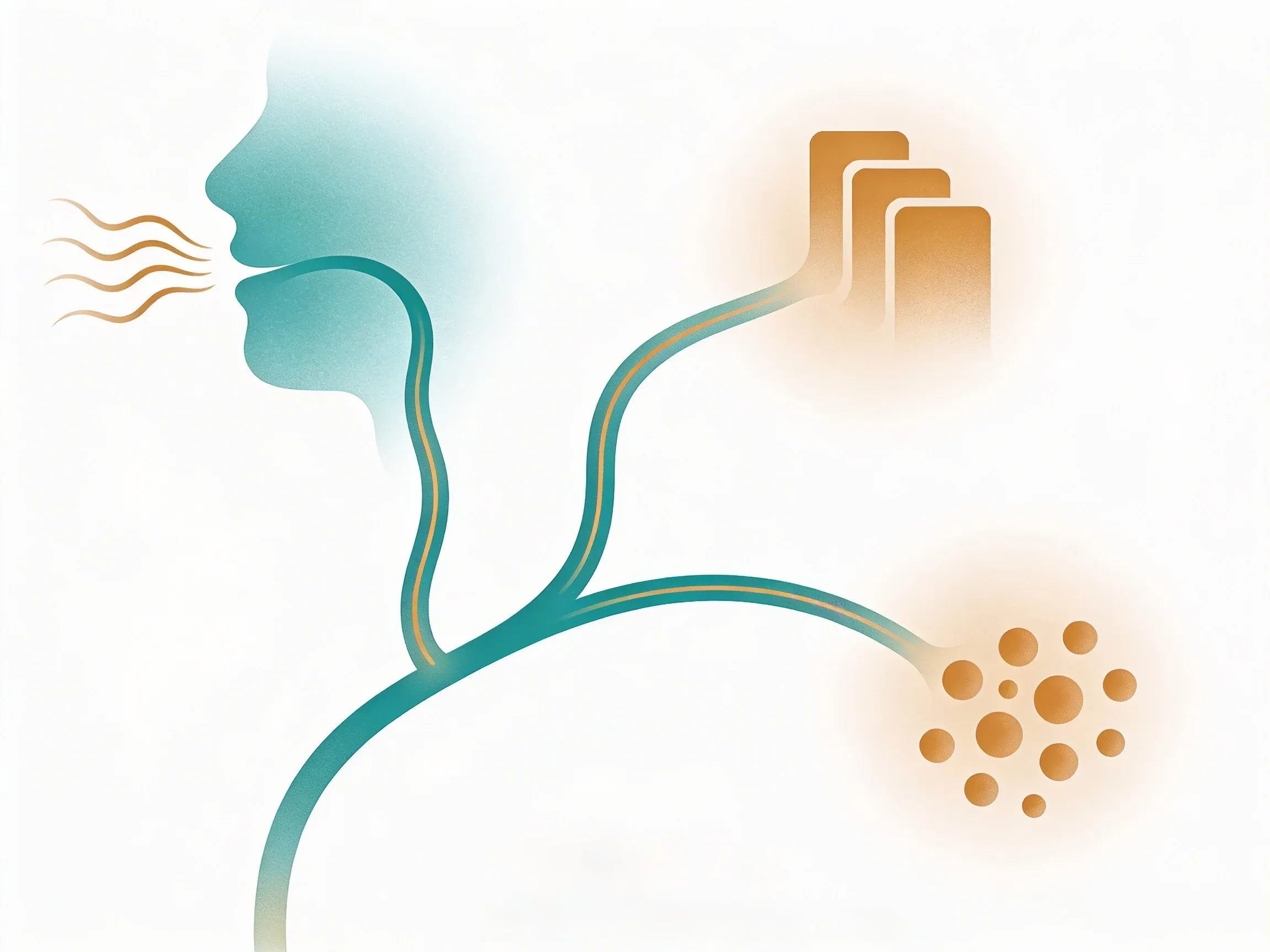
Think of it like pressing a reset button. The quick response happens because your vagus nerve acts as a direct highway between your brain and body's stress controls.
But here's the thing: feeling calmer in the moment isn't the same as long-term stress strength.
What Happens in the First Few Weeks?
Studies often use 15-minute sessions once or twice daily for two weeks to measure first effects1. During this time, you're training your nervous system.
Some people report:
- Better sleep within the first week
- Fewer racing thoughts during stress
- Better ability to recover after hard days
- More steady energy levels
Here's where it gets good: your vagus nerve is building new patterns, like growing a muscle. The real benefits are still growing beneath the surface.
A 2024 trial of mothers caring for children with cerebral palsy found stress improvements after just two weeks of daily vagus nerve stimulation2. But don't expect big changes yet.
Timeline: What to Expect Week 1-2: Focus on quick responses (slower heart rate, calmer breathing). Don't judge how well it works yet. Week 3-4: Better sleep and faster stress recovery may show up. Some overwhelming days are still normal. Month 3+: Real strength changes usually begin. Stress becomes easier to handle overall.
Why Does Long-Term Relief Take Months?
Studies on implanted VNS devices show that real improvements usually begin after three months of daily use3. The brain needs time to rewire stress response patterns.
Now here's the catch: this process doesn't happen overnight. Your autonomic nervous system is creating new pathways for handling stress.
Some studies suggest approximately 50% of patients may experience significant improvement after one to two years of VNS therapy3. That might sound like a long time, but consider what's happening:
- Your stress response becomes less jumpy
- Recovery time after stress gets shorter
- Daily anxiety levels slowly decrease
- Overall emotion control improves
Think of it like learning piano. When you first press a key, you hear a clear note immediately -- that's like the instant calm you feel from VNS. Your finger knows exactly what to do for that single sound. But when you first try to play a song, your fingers fumble across the keys, missing notes and losing rhythm. After months of daily practice though, muscle memory takes over. Your hands flow across complex pieces without thinking. The immediate response (pressing keys) was always there, but the skill to create beautiful, flowing music took time to develop.
Stress management works the same way. VNS gives you immediate access to calm (like pressing a piano key), but your nervous system needs months of practice to develop smooth, automatic responses that replace old panic patterns with lasting resilience.
Do the Benefits Get Stronger Over Time?
Yes. This is one of the most hopeful parts of VNS research. Studies show that benefits often improve with time rather than level off1.
This makes sense when you understand how it works. Each session strengthens your vagus nerve's ability to turn on the "rest and digest" response. Over months, this builds into a stronger stress response system.
Many users report a slow shift rather than sudden breakthrough moments. Stress that used to overwhelm them becomes easier to handle. They bounce back faster from hard situations.
Minutes: Quick Effects: Heart rate slows, breathing deepens -- Long-term Effects: Short-term calm only
Weeks: Quick Effects: Better sleep, faster recovery -- Long-term Effects: Building brain pathways
Months: Quick Effects: Some overwhelm still normal -- Long-term Effects: Less jumpy stress response
6+ Months: Quick Effects: Day-to-day improvements -- Long-term Effects: Steady strength patterns
How Long Should I Try VNS Before Deciding?
Based on study timelines, give it at least 8-12 weeks of daily use before making a choice. This matches how long it takes for real brain changes to develop.
For "daily use," aim for at least one 15-20 minute session per day, ideally at the same time each day. Some people benefit from two shorter sessions -- one morning, one evening. The key is consistency over intensity.
Some people see benefits sooner. Others need more time. Response times vary a lot based on:
- Your current stress levels
- How long you've dealt with chronic stress
- How often you use it
- Whether you combine VNS with other stress practices
Here's what most people miss: the real benefits often showed up between months 2-6, not in the first few weeks.
To track your progress beyond just immediate sensations, keep a simple stress diary. Rate your overall stress level (1-10) each evening, note sleep quality, and track how quickly you recover from stressful events. This data helps you see patterns that daily feelings might miss.
If you're not seeing any changes after three months of daily use, it might be worth changing your approach or trying other options. But patience often pays off with vagus nerve training.
Is There a Difference Between Device Types?
Most research on VNS timelines comes from studies using implanted devices for epilepsy and depression3. These give steady stimulation 24/7. This explains the months-long timeline for full benefits.
Non-invasive devices work differently. You control when and how long you use them. This means:
- More direct control over sessions
- Benefits tied to how often you practice
- Possibly faster awareness of effects since you actively take part
The bottom line? The exact timeline comparison isn't clear yet. Research on consumer VNS devices for stress is still new. But the rule remains: daily use over time builds the strongest benefits.
For optimal results, daily practice matters more than session length. Many people find success by learning strategic timing -- knowing when to use VNS during their daily routine can maximize the calming benefits and help build resilience patterns. Talk to your doctor before starting any new wellness practice, especially if you're dealing with long-term stress or anxiety.
Quick Reference: Timeline Expectations Give it at least: 8-12 weeks of daily use Quick effects: Heart rate changes, deeper breathing (within minutes) Early benefits: Better sleep, improved recovery (2-4 weeks) Real change: Less jumpy stress response (3+ months) Peak benefits: Often keep improving over 6-24 months